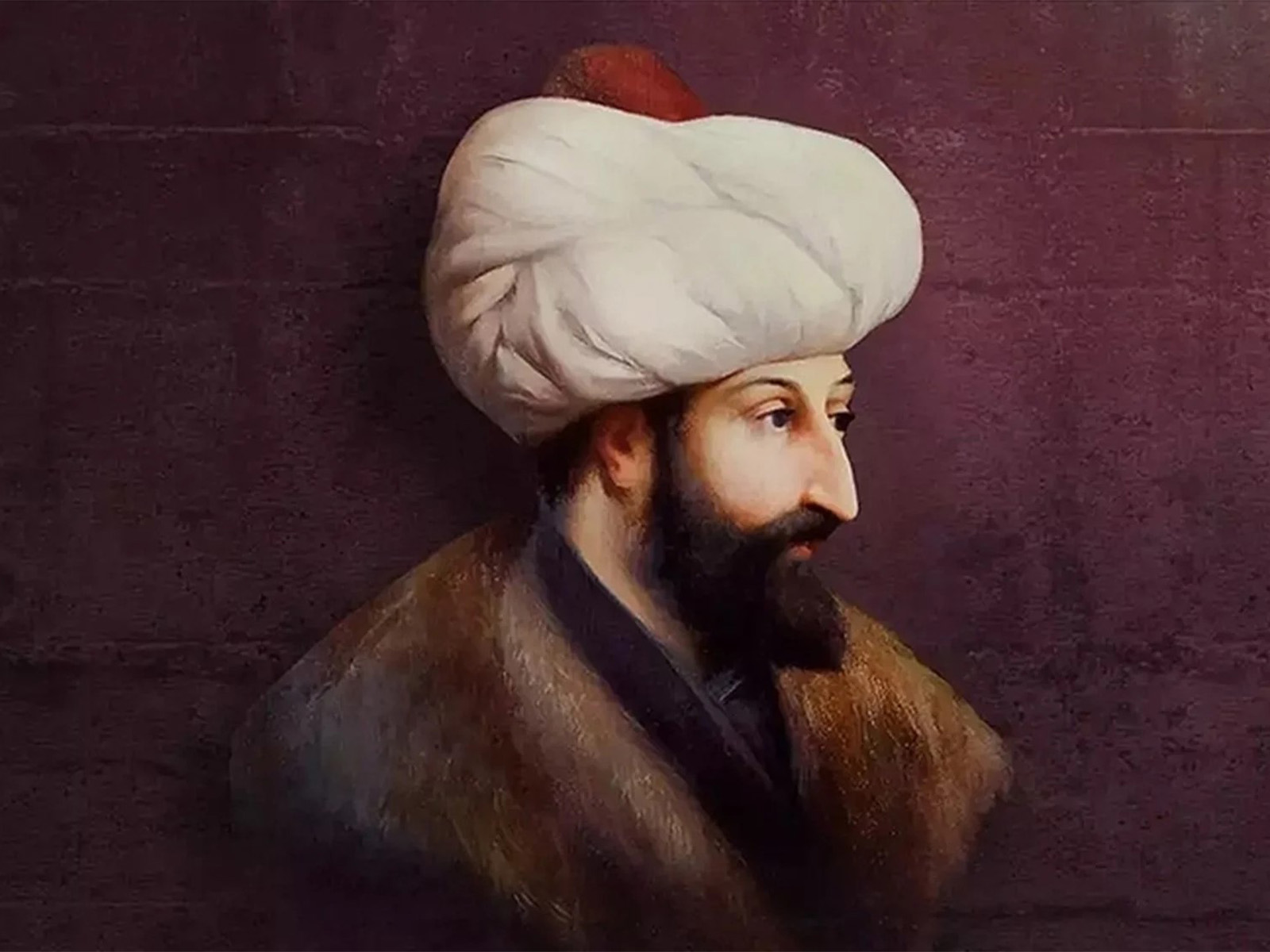
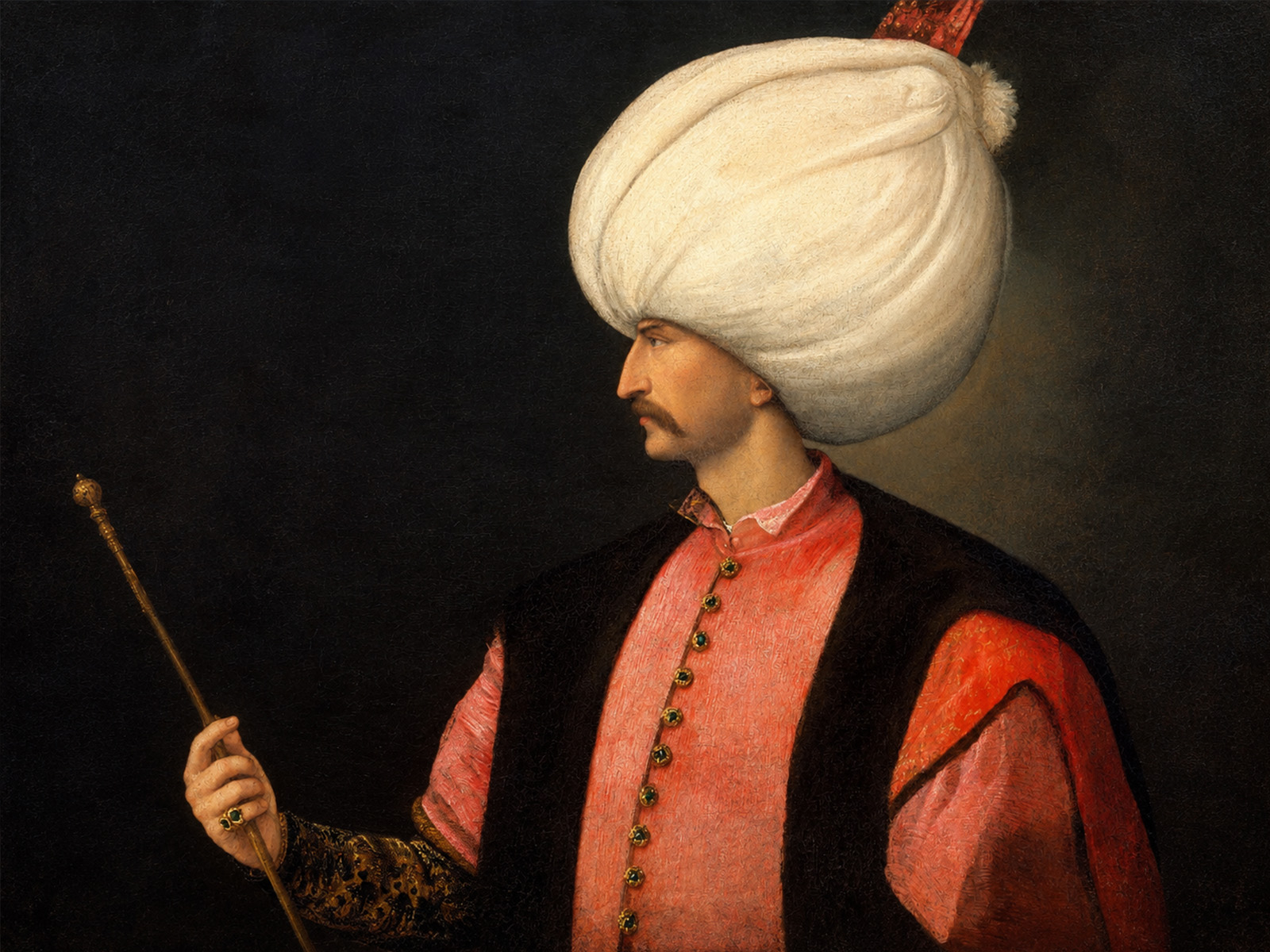
Suleiman the Magnificent
Suleiman the Magnificent: The Sultan at the Height of the Ottoman Empire
One of the most important rulers in Ottoman history, Suleiman the Magnificent was born on November 6, 1494, in Trabzon, on the Black Sea coast of present-day Türkiye. His father was Sultan Selim I and his mother was Hafsa Sultan. Suleiman spent his early childhood in Trabzon, where he received a comprehensive palace education. He studied Arabic and Persian as well as literature, history, religion, and the arts. As a young prince, he was also introduced to government and administration. He served as governor of Kefe and later Manisa, where he spent several years gaining valuable experience that prepared him for the throne. When his father, Sultan Selim I, died in 1520, Suleiman came to Istanbul and ascended the Ottoman throne on September 30, 1520, at the age of only 26.
The Ruler Europe Called “The Magnificent”
Suleiman’s reign holds a special place not only in Ottoman history but also in European history. Contemporary Europeans referred to him as “The Magnificent” and sometimes as “The Grand Turk.” In the Ottoman world, he eventually became known as Kanûnî, meaning “the Lawgiver.” Interestingly, the title “Kanûnî” was not necessarily the name most commonly used for him during his own lifetime; it became established more strongly in later centuries. Suleiman was not merely a military ruler. During his reign, law, government administration, education, art, architecture, and the charitable foundation system known as the waqf (vakıf) system all developed significantly. He was known for taking the administration of justice seriously and for intervening when officials abused their authority. His reign was marked by an effort to establish a strong and orderly system of government throughout the empire.
From Belgrade and Rhodes to Mohács and Baghdad
Suleiman’s reign was shaped by a series of major military campaigns. In 1521, Belgrade was conquered. The following year, in 1522, the Ottoman army besieged Rhodes, forcing the Knights of St. John to leave the island. One of the most decisive victories came in 1526 at the Battle of Mohács, which dramatically changed the political balance in Hungary and strengthened Ottoman influence in Central Europe. In 1529, the Ottoman army reached the gates of Vienna. In the east, Suleiman’s empire was involved in prolonged conflicts with the Safavid Empire. During his reign, Ottoman control expanded into Iraq, including Baghdad, while Ottoman influence in eastern Anatolia and parts of the Iranian frontier increased. The empire also strengthened its position around Yemen and Basra, helping it compete for important commercial routes leading toward the Indian Ocean. The Ottoman Empire under Suleiman became a vast empire stretching across parts of Europe, Asia, North Africa, and the Mediterranean. At sea, the empire’s power also reached new heights. Great Ottoman naval commanders such as Barbarossa Hayreddin Pasha played a crucial role in establishing Ottoman dominance in the Mediterranean.
Suleiman and Hürrem Sultan: A Remarkable Love Story
One of the most fascinating aspects of Suleiman’s personal life was his relationship with Hürrem Sultan. The identity and early life of Hürrem Sultan have been the subject of historical discussion. she was probably from the region around Rohatyn (Rogatin), in present-day Ukraine, and was possibly the daughter of a Catholic priest. She was captured during a Crimean raid while she was still young and was eventually brought into the Ottoman palace. Her original name is often given as Alexandra Lisowska, although historical sources do not provide absolute certainty on every detail of her early life. At the Ottoman palace, she became known as Hürrem or Hürremşah. The word Hürrem means cheerful, joyful, or pleasant. There is no reliable historical evidence proving that one specific person gave her this name. It is generally understood that the name was given to her within the palace environment. Hürrem eventually became one of the most influential women in Suleiman’s life. She was the mother of Şehzade Mehmed (Şehzade = The son of an Ottoman sultan, particularly a male member of the dynasty who was educated and trained for the possibility of ascending to the throne.), Mihrimah Sultan, Şehzade Abdullah, Sultan Selim II, Şehzade Bayezid, and Şehzade Cihangir. Her position also created a serious rivalry with Mahidevran Sultan, the mother of Şehzade Mustafa. Suleiman’s feelings for Hürrem are particularly visible through the poems and letters he wrote to her. Suleiman himself was a poet and wrote under the pen name Muhibbî. His poems reveal a deeply emotional side of the powerful sultan. In them, he expressed his love, longing, affection, and devotion to Hürrem. Hürrem Sultan died in Istanbul on April 15, 1558. She was buried in her own mausoleum beside the Süleymaniye Mosque. Her tomb was built by the great Ottoman architect Mimar Sinan.
Mimar Sinan and the Istanbul of Suleiman
Perhaps one of the most enduring legacies of Suleiman’s reign can be found not on the battlefield, but in the architecture of Istanbul. The greatest architect of the Ottoman classical period was undoubtedly Mimar Sinan. Sinan’s relationship with Suleiman was much more than that of a ruler and an architect. Suleiman gave Sinan the opportunity to create monumental works that reflected the power, sophistication, and cultural confidence of the Ottoman Empire.
Among Sinan’s most important works during Suleiman’s reign were:
* Şehzade Mosque
* Süleymaniye Mosque and Complex
* Mihrimah Sultan Mosque in Üsküdar
* Kırkçeşme Waterworks
* Büyükçekmece Bridge
* Numerous mosques, schools, bridges, baths, water systems, and other public buildings
It is important to clarify one common misconception: Mimar Sinan did not invent modern concrete or cement.
His greatness lies in his extraordinary ability to combine existing construction materials, structural techniques, domes, arches, water engineering, and spatial design at an exceptional level. His architectural achievements pushed Ottoman architecture to one of its highest points.
The Süleymaniye Mosque: Suleiman’s Signature in Istanbul
Construction of the Süleymaniye Mosque and Complex began in 1550 and was completed in 1557. The complex was far more than a mosque. It included religious schools, a hospital, an almshouse, a hadith school, and other social and educational institutions. It functioned as a major center of education, religion, social assistance, and public life. Today, the Süleymaniye Complex remains one of the defining monuments of Istanbul’s Ottoman skyline.
When we look at Süleymaniye today, we can see three remarkable figures connected to the same story: Suleiman the Magnificent, Hürrem Sultan, and Mimar Sinan. Suleiman’s own tomb is also located here.
The Personality of Suleiman
Suleiman cannot easily be described with a single word. Historical sources portray him as a ruler who valued education, poetry, art, law, discipline, and good administration. He was also interested in poetry, hunting, and craftsmanship. He wrote poetry throughout his life under the name Muhibbî. His poetry reveals a much more emotional and sensitive side than the image of the powerful conqueror might suggest. As for his physical appearance, Ottoman miniatures and accounts by contemporary Western observers provide some clues. He was often described as tall, strong, dignified, and imposing. However, we do not have reliable modern measurements of his exact height or weight, and artistic representations of rulers were often idealized. Therefore, descriptions of his physical appearance should be treated with some caution.
His Final Campaign and Death
Suleiman’s final military campaign took place in 1566, when he marched toward Szigetvár (Sigetvar). He was 71 years old and his health had significantly deteriorated. Despite his condition, he insisted on remaining with his army. Suleiman died during the siege on the night of September 6–7, 1566. One of the most remarkable details surrounding his death is that it was kept secret from the Ottoman army. His commanders feared that news of the sultan’s death would destroy the army’s morale. The fortress of Szigetvár was conquered shortly after his death, but Suleiman never witnessed the victory. His body was preserved and secretly transported back toward Istanbul with the Ottoman army. After arriving in Istanbul, a funeral prayer was performed and Suleiman was buried in his mausoleum beside the Süleymaniye Mosque.
What Happened to Suleiman’s Heart?
There is a fascinating and controversial story concerning Suleiman’s heart and internal organs. According to a widespread tradition, his heart and some of his internal organs were buried near Szigetvár, at the place where he died. However, this should not be presented as an established historical fact. Therefore, it would be historically inaccurate to state with certainty:
“Suleiman’s heart is buried in Hungary.” What we can state with certainty is that Suleiman’s body was brought back to Istanbul and buried in his mausoleum within the Süleymaniye Complex. His mausoleum was constructed by Mimar Sinan shortly after his death. The octagonal tomb is considered one of the outstanding examples of classical Ottoman architecture.
The Legacy of a Great Sultan
Suleiman’s 46-year reign is widely regarded as one of the most powerful and influential periods in Ottoman history. Under his rule, the Ottoman Empire reached from the heart of Europe to North Africa, from Iraq and the eastern Mediterranean to the Arabian Peninsula and the Red Sea. Yet Suleiman’s greatest legacy cannot be measured only by the territories he conquered. His era produced magnificent examples of architecture, education, law, literature, art, urban development, and charitable foundations. Today, Istanbul still preserves countless monuments from his reign, including the Süleymaniye Mosque, the Şehzade Complex, the Haseki Complex, Hürrem Sultan’s charitable institutions, bridges, water systems, and numerous other Ottoman works. Hürrem Sultan herself commissioned important charitable buildings, including the Haseki Complex, which included a mosque, school, soup kitchen, and hospital. Suleiman therefore left behind more than a growing empire. As a ruler, he expanded the borders of the Ottoman state. As a statesman, he strengthened its laws and institutions. As a poet, he expressed his deepest emotions through verse. And as a patron of art and architecture, he helped create an Istanbul whose monuments still define the city today. Perhaps that is the best way to understand Suleiman the Magnificent. He was not simply a conqueror. He was the ruler of an empire at the height of its political power—and one of the central figures of the Ottoman age that shaped Istanbul and much of the world around it.

Get in touch now
Ready for an unforgettable tour?