
An all-day European and Asian Side Walking Tour
- Tour name : An all-day European and Asian Side Walking Tour
- Operates : Everyday ( all year round)
- Tour highlights: Fener and balat streets, Taksim square and Istiklal street, Galata Tower, Karaköy and Kadıköy.
Historic and colorful streets of Fener and Balat – Fener
Fener stretches along the western shore of the Golden Horn, between the neighborhoods of Balat and Cibali. In the Byzantine period it was known as Fanarion (meaning “lighthouse”), a name derived from one of the most important lighthouses on the Golden Horn, which once stood here.
Until the second half of the 20th century, Fener was known as the largest Greek (Rum) settlement in Istanbul. In the early 17th century, when the Ecumenical Patriarchate moved here, the district became the most important Greek quarter of the city. The transfer of the Patriarchate to Ecumenical Patriarchate of Constantinople strengthened Fener’s role as a religious and cultural center.
The Greeks of Fener, known historically as the Phanariots, gained prominent positions within the Ottoman administrative system, particularly as translators and diplomats. Thanks to their high level of education, cultural refinement, and knowledge of multiple foreign languages, they often served in embassies and as official interpreters. Others became wealthy through trade.
Although Fener experienced frequent fires throughout its history and was rebuilt many times, it has managed to preserve much of its original character. The main road was asphalted in 1970.
On the Fener waterfront, the Orthodox Epiphany ceremony—once interrupted after 1952—has in recent decades been revived. Every year on January 6, commemorating the birth and baptism of Jesus Christ, Orthodox young men dive into the waters of the Golden Horn to retrieve a cross thrown into the sea by the Patriarch during prayers. The one who recovers the cross is rewarded with a golden cross by the Patriarch. During this ceremony, known among the Greeks as the Phota (or Fota) Feast, it is believed that the waters are blessed.
The Greeks who once gave Fener its distinctive identity no longer live here in large numbers. Until the 1940s, they formed the majority of the population. However, due to industrialization, which significantly altered the character of the neighborhood, many gradually moved to other parts of Istanbul such as Princes’ Islands, Kadıköy, Yeşilköy, and Şişhane, or emigrated to Greece.
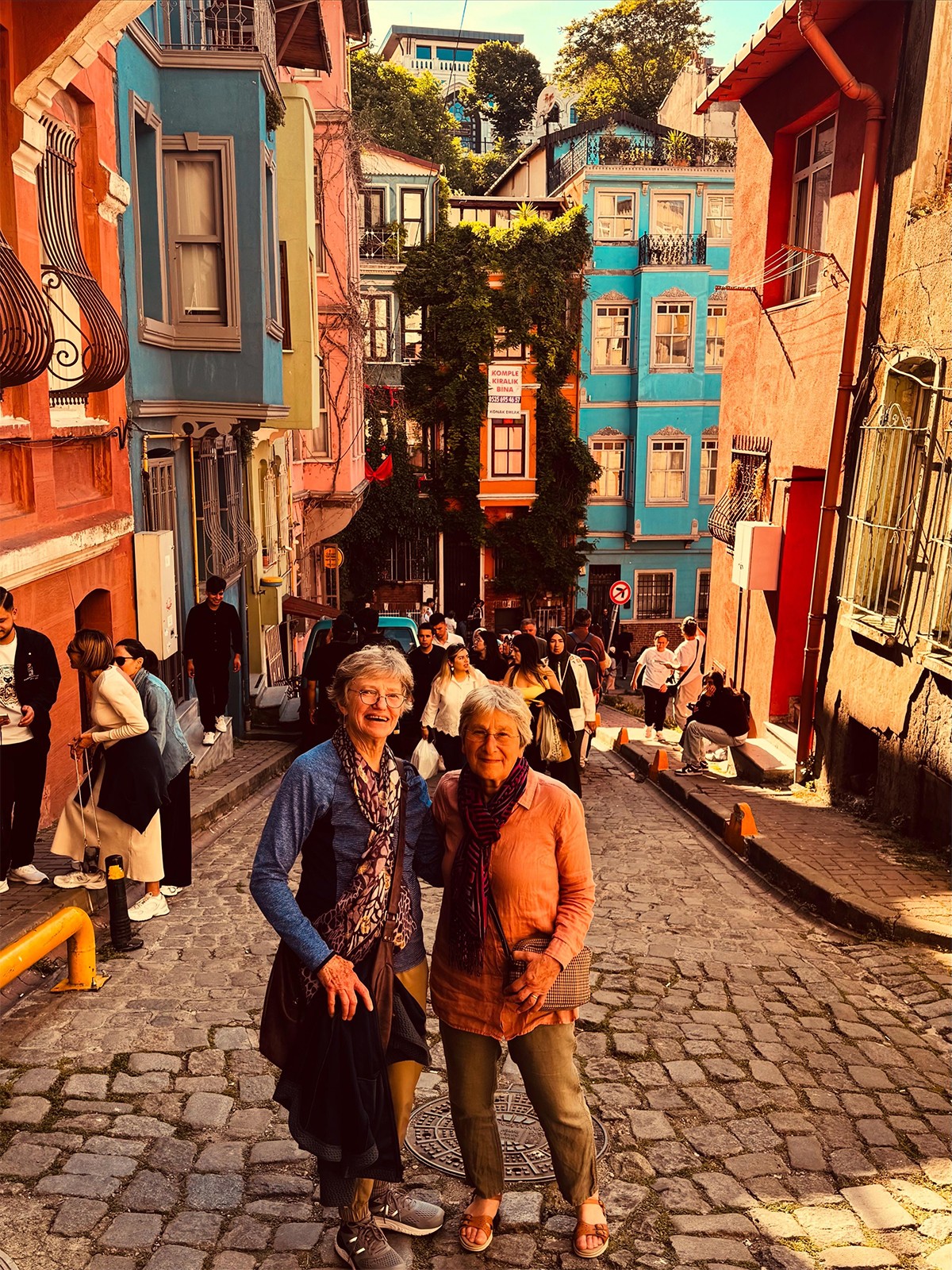
Today, Fener’s sturdy stone houses, columned entrances, decorated balconies, mosaic gardens, and the stone courtyards visible through open doors offer clues about life several centuries ago. It is also possible to see laundry hanging from pulley-operated ropes stretched between houses—a characteristic feature of Mediterranean neighborhoods.

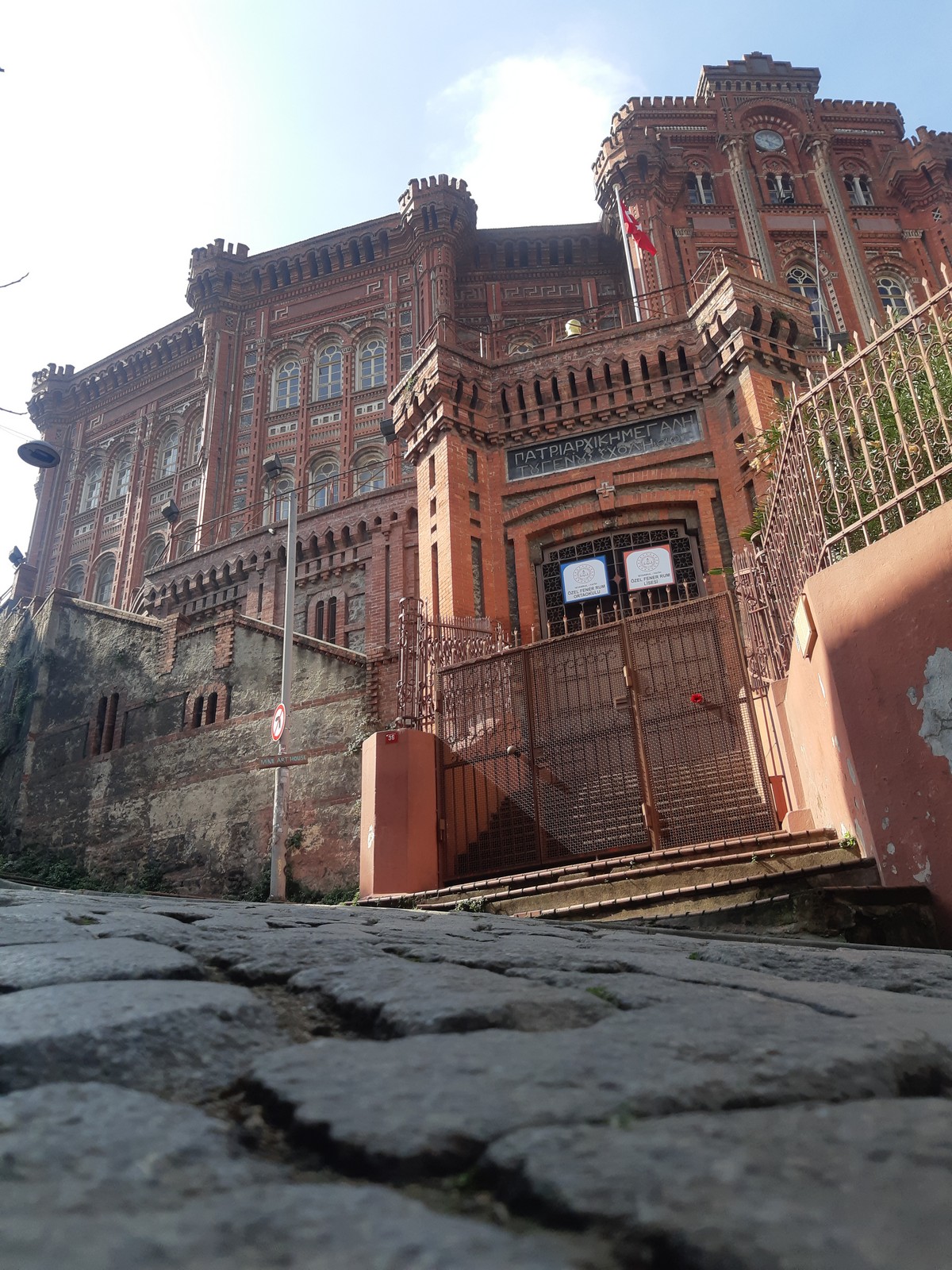
Private Fener Greek Orthodox Secondary and High School
Sharing the same hill as the Church of St. Mary of the Mongols (known in Turkish as Kanlı Meryem), this school is not only the oldest continuously operating educational institution in Istanbul, but also one of the oldest schools in the world.
Throughout its long history, it has been known by several names, including Megali Scholi (the “Great School”), the Red School, Mekteb-i Kebir (the Great School), and the Patriarchal Academy. Its foundation dates back to before the Ottoman conquest of Constantinople.
One year after the conquest in 1453, Mehmed II guaranteed the Orthodox community freedom of worship, education in their mother tongue, and the restoration of the Patriarchate. Following this decree, many Byzantine bureaucrats and merchants who had left the city returned. With the Sultan’s official permission and support, the Greek Orthodox Patriarch Gennadius Scholarius established a school in this district.
The magnificent red building visible today was constructed between 1880 and 1882. It was designed by Konstantinos Dimadis, a graduate of the school and one of the leading architects of his time. The structure owes its distinctive color to the famous red bricks imported from Marseille.
Throughout the Ottoman period, many voivodes and hospodars were educated here. From the founding of the Turkish Republic until 1989, the institution functioned as a boys’ high school. In 1989, it became coeducational and adopted the name Fener Greek Orthodox Secondary and High School.
Because of its imposing and monumental appearance, many people mistakenly assume from a distance that the building is the Patriarchate itself.
It can be said that philosophy and modern sciences were first systematically taught within the Ottoman territories at this school. Likewise, organized foreign language education began here. After 1861, with a few exceptions, its curriculum became similar to that of other classical high schools. In 1903, a department was added to train primary school teachers, offering classical philology and pedagogy.
A telescope was installed in the dome of the building, and this section was designed as an observatory for astronomical studies. The school also possesses a remarkably rich library. Its ceremonial hall, decorated with columns and wall paintings depicting scenes from Ancient Greek history, is particularly magnificent.

Church of St. Mary of the Mongols
(Kanlı Kilise / Muhliotissa)
Also known as the Bloody Church and the Church of St. Mary of the Mongols, this rose-pink building stands slightly weathered, with an unusually high drum supporting its dome. The church is dedicated to Theotokos Panagiotissa—the Holy Mother of God—but is more commonly referred to as Muhliotissa or St. Mary of the Mongols.
It was rebuilt in 1282 by Princess Maria Palaiologina, the illegitimate daughter of the Byzantine Emperor Michael VIII Palaiologos.
In 1265, Maria was sent by her father as a bride to the Mongol ruler Hulagu Khan. However, Hulagu died before she arrived at the Mongol court, and she subsequently married his son and successor, Abaqa Khan. She lived in the Mongol palace in Persia for about fifteen years. Influenced by her presence, many members of the khan’s court are said to have embraced Christianity.
In 1281, when Abaqa was killed by his brother Ahmad, Maria was forced to return to Constantinople. After her return, her father attempted to arrange another marriage for her with a Mongol ruler named Qarabanda, but this time Maria refused. Instead, she restored the church and founded a convent for women, dedicating it to Muhliotissa, “the Queen of the Mongols.” Maria—also known as the Queen of the Mongols—became a nun and spent her final years in seclusion at the convent.
This romantic story is only partially accurate. In fact, the original church had been founded in 1261 by Isaakios Doukas, the uncle of Michael VIII. The Queen of the Mongols likely added certain extensions and decorative elements to the structure.
After the conquest of Constantinople, Mehmed II granted the church to the local Greek community at the request of the Greek architect Christodoulos. The original imperial decree (firman) is still displayed there today. It is the only Byzantine church in Istanbul that has remained in continuous Greek Orthodox ownership since the conquest.
Architecturally, the church originally followed a trefoil plan—four-lobed internally and three-lobed externally. A small central dome rises on a high drum and is surrounded along the axes by four semi-domes, all resting on the outer walls of the structure except for the western one
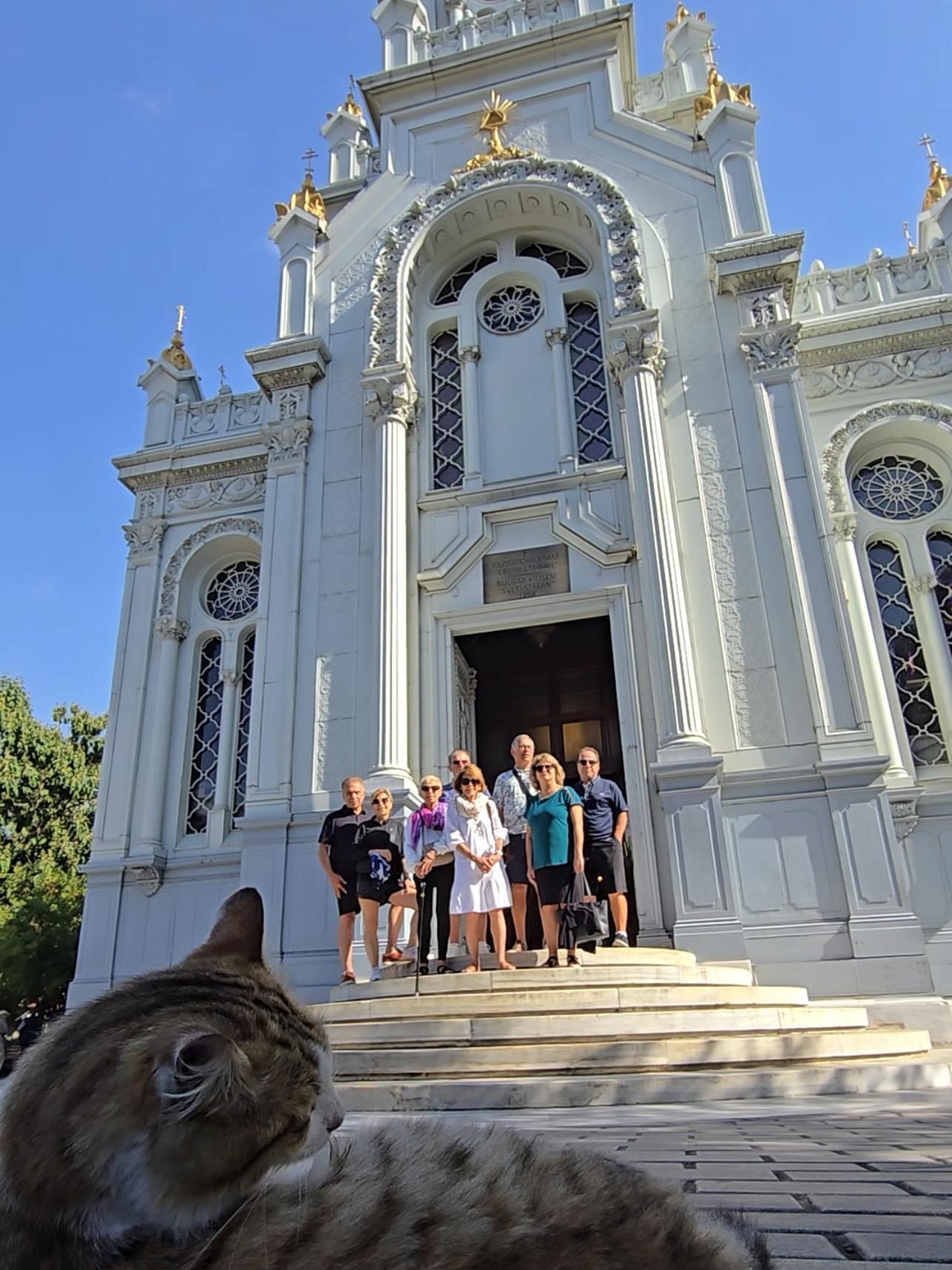
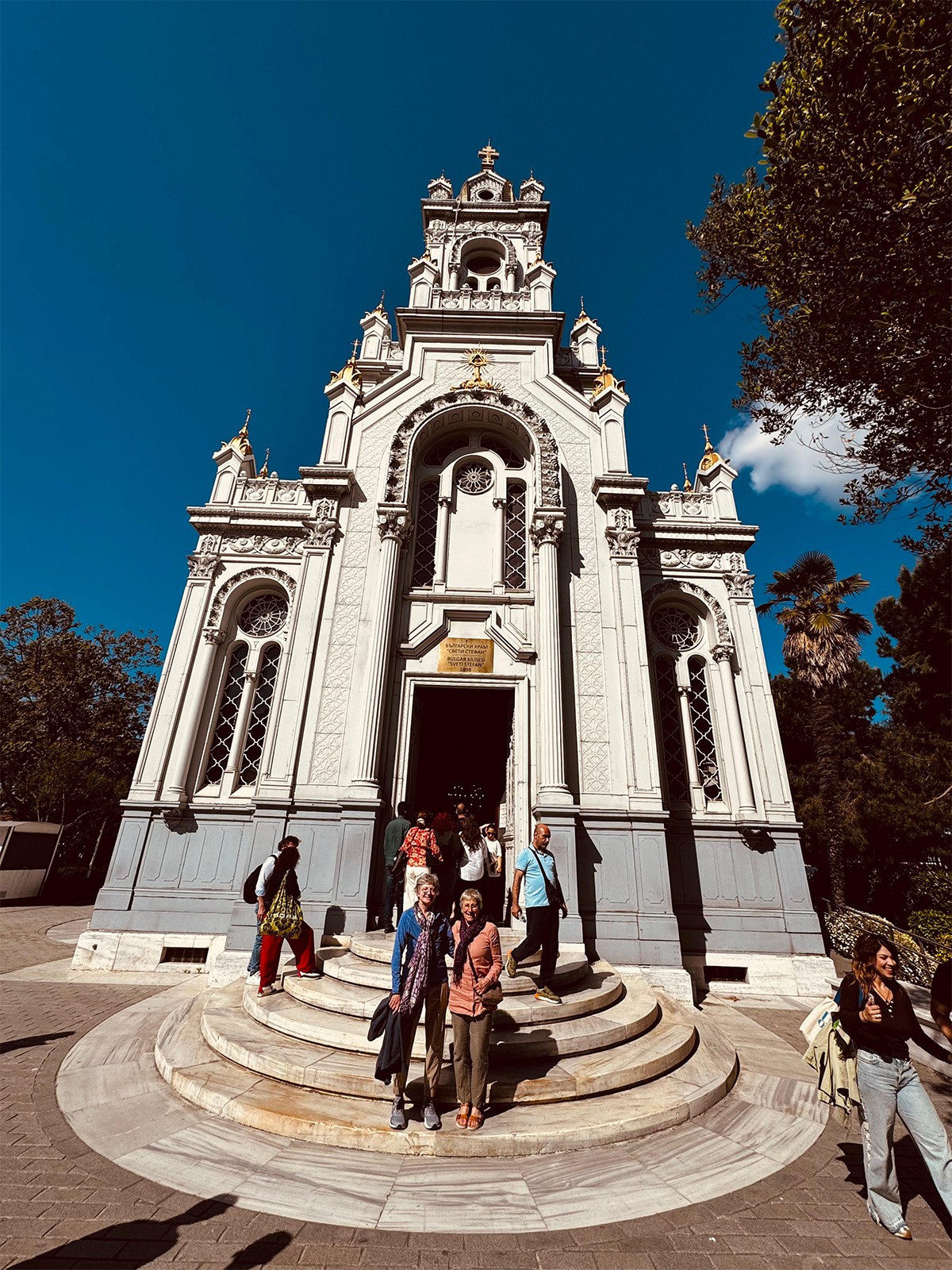
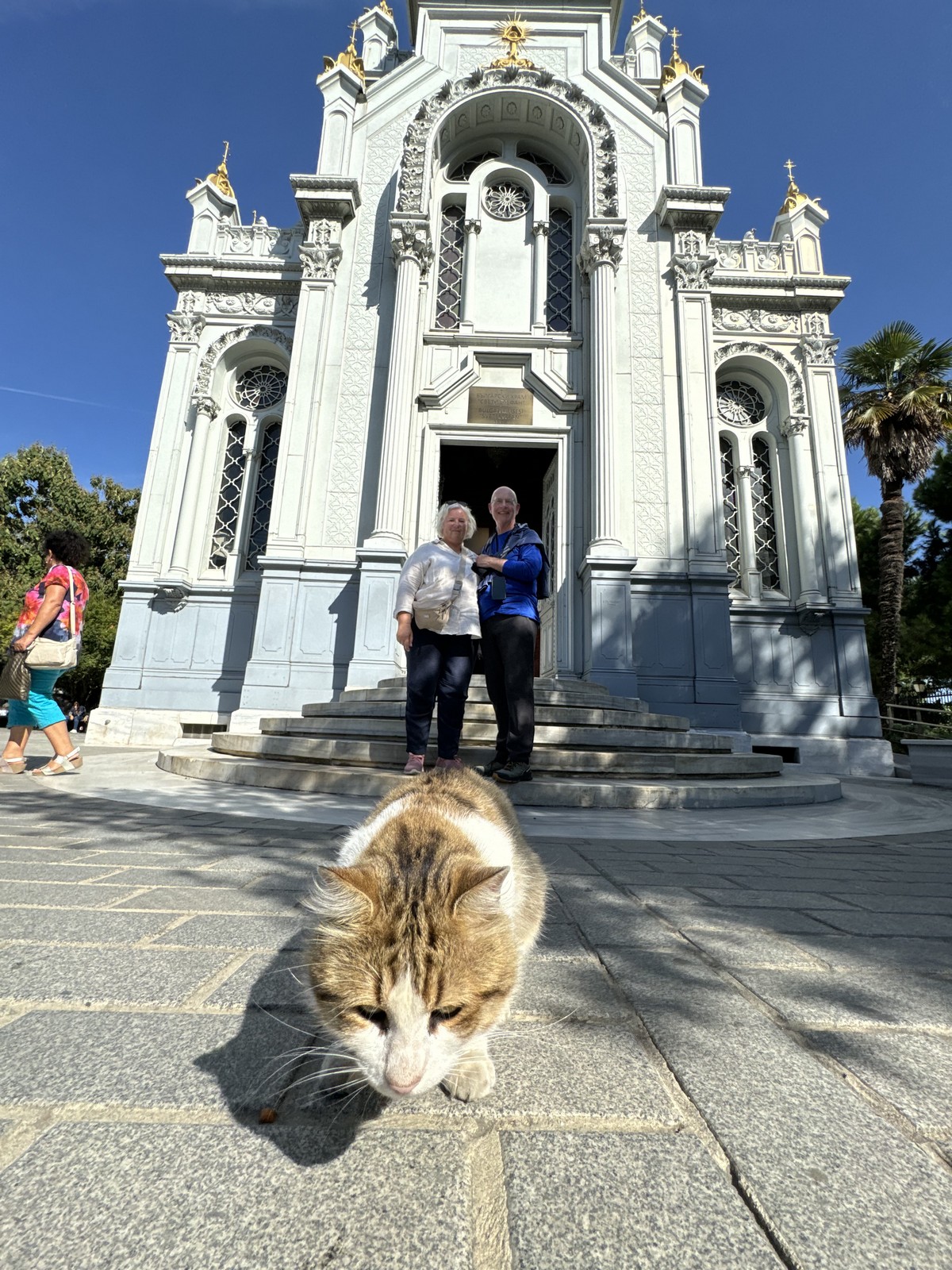
Sveti Stefan Church
(Bulgarian Iron Church)
Located along the shores of the Golden Horn between Balat and Fener, this architecturally remarkable Bulgarian Orthodox church is one of the most distinctive religious monuments in Istanbul.
The church takes its name from Sveti (meaning “Saint”) and from Prince Stefan Bogoridi, a high-ranking Ottoman bureaucrat who donated the land on which it stands. It is affiliated with the Bulgarian Exarchate in Istanbul and is widely known as the “Iron Church” because it was constructed from prefabricated cast-iron elements. It is considered the most magnificent Bulgarian monument in Turkey.
With the reforms of the Tanzimat and Islahat Edicts, which granted new freedoms to non-Muslim minorities in the Ottoman Empire, religious and national consciousness among Bulgarians began to rise. Especially in the 1860s, as legal regulations allowed communities such as the Greeks, Armenians, and Jews to govern their own internal affairs through patriarchal and communal statutes, Bulgarians accelerated their organization around national identity.
Growing tensions between Greeks and Bulgarians within the Orthodox community led the Bulgarians to separate collectively from the Greek Orthodox Patriarchate and declare to the Ottoman authorities that they would no longer recognize the leadership of the Greek Patriarch. Efforts to establish an independent Bulgarian Orthodox Church intensified, and in 1870, a decree issued by Abdulaziz officially recognized the Bulgarian Orthodox population as a separate religious community within the Ottoman Empire.
The first Bulgarian church on this site, opened for worship in 1849, was a wooden structure. Because it soon became insufficient for the growing congregation, permission was obtained from the Ottoman authorities to construct a new stone church. For this project, the famous architects Gaspare Fossati and Giuseppe Fossati—well known in the Ottoman Empire—were invited. However, after the foundations were laid, the project was abandoned due to insufficient funds.
The present structure represents the third and final construction phase. In 1882, the Istanbul-based architect Antoine Perpignani conducted ground and foundation studies and completed his design. After consultations with the Bulgarian government and the inclusion of requested modifications, the project prepared by Hovsep Aznavur was selected in 1883 as the winning design for the new church.
In 1890, Aznavur demolished the earlier foundations built by the Fossati brothers and carried out a detailed soil survey. Because the building site had weak ground conditions, 330 piles were driven into the soil and reinforced with oak beams to stabilize the foundation. It was determined that constructing the church in stone would be impossible due to the unstable terrain. Therefore, to reduce weight, it was decided that the entire building would be made of prefabricated iron components.
The steel and cast-iron elements were manufactured in Vienna by the R. Ph. Waagner Company and transported to Istanbul by sea. Once delivered to the site, the pieces were assembled according to the project specifications, completing the construction.
At the time of its construction, only three other similar iron churches existed in the world. The church has survived to the present day. While its main structural framework is made of steel, the rest of the building consists entirely of cast iron. Its fully iron bell tower rises approximately 40 meters high, making it one of the most striking features of the Golden Horn skyline.
Beyoğlu / İstiklal Avenue
The district of Beyoğlu, known as Pera before the conquest of Istanbul and once a major hub for European merchants, has remained one of the city’s most important centers of trade, culture, and tourism from past centuries to the present day. İstiklal Avenue, stretching 1.5 kilometers, is closed to vehicle traffic. Taksim Square lies at the northern end of the avenue, while Tünel Square is located at its southern end.
From Taksim Square—home to the Republic Monument, built in the early years of the Republic to convey the ideals of the new regime to the public—the area extends down to Galata, where numerous historic religious, cultural, and social buildings belonging to different nations and communities can be seen. With its cafés and restaurants, shopping arcades, entertainment venues, historic streets, museums, religious buildings, and nostalgic tram, İstiklal Avenue welcomes large numbers of local and international visitors throughout the year and is perhaps one of the most important symbols of Istanbul.
The road that continues downhill from the end of İstiklal Avenue leads to the Galata Tower, which offers panoramic views of the Bosphorus and the Golden Horn and is included on UNESCO’s World Heritage Tentative List.
Before the conquest of Istanbul, Beyoğlu was known as “Pera,” meaning “the other side,” and became a settlement where the Genoese colonies lived. In the area where today’s İstiklal Avenue is located, there were vineyards, hunting grounds, and cemeteries. Due to their disputes with VIII. Mikhail Palaiologos, the Genoese settled in Galata.
After the conquest of Istanbul, the English, French, and Dutch who wished to trade with the Ottoman Empire settled in Pera. As the French gained supremacy over the Genoese in Europe, this dominance was reflected in Pera as well, resulting in greater French influence over the district’s development.

Galata Genoese and Mehmed II
On June 1, 1453, the Friday prayer was performed in Hagia Sophia, which had been swiftly converted into a mosque. On the same day, a decree written in Greek was granted to the Genoese. The document bore the signature of the Sultan’s father-in-law and grand vizier, Zağanos Pasha, and featured Mehmed II’s tughra at the top.
Through this decree, the Sultan granted privileges to the Genoese of Galata. These privileges constituted the legal basis for the Latin community’s freedom of worship and the preservation of their churches for more than 400 years, until the proclamation of the Republic in 1923. However, it should be noted that the civil and religious privileges granted to the Genoese stemmed from their apparent neutrality during the siege.
Beyoğlu / Taksim Square and the Origin of Its Name
Located within the boundaries of Beyoğlu district, Taksim Square stands at the intersection of İstiklal Avenue, Sıraselviler Avenue, Gümüşsuyu Avenue, Cumhuriyet Avenue, and Tarlabaşı Boulevard.
The name of the square derives from the “maksem” (water distribution structure), which was built in the 18th century by Mahmud I to meet the city’s water needs. Water brought from the springs of the Belgrad Forest was collected at this structure, located at one of the highest points of Beyoğlu, and then distributed to Tophane, Galata, and Kasımpaşa. Because the water was “divided” (taksim) and distributed from this point, the area later came to be known as “Taksim.”
Taksim Republic Monument
The Taksim Republic Monument was created by the Italian sculptor Pietro Canonica (1869–1959), while its landscaping was designed by Giulio Mongeri. It is one of the monuments commissioned from foreign sculptors during the early years of the Republic. The purpose of the monument was to introduce and symbolize the ideology of the Republic to the public.
Bronze and Italian marble were used as the primary materials in the sculptures. The monument, which stands 11 meters tall, features on its northern façade a depiction of the military figure of Mustafa Kemal Atatürk along with men and women of various ages, symbolizing the Turkish War of Independence.
On another side of the monument, Mustafa Kemal Atatürk is portrayed in civilian attire, accompanied by soldiers and members of the public. Among the figures, İsmet İnönü, Fevzi Çakmak, and two Russian officers can also be seen. A figure of an urban woman is also noticeable among the sculptures.

Beyoğlu / Galata – Pera
The historical roots of Pera and Galata are as old as Constantinople itself. Settlements and communities have existed on the northern shore of the Golden Horn since ancient times. The origin of the name “Galata” is unknown, but “Pera” is quite clear: in Greek, pera means “the other side” or “beyond.” Initially, it was used to refer to the opposite shore of the Golden Horn. Later, it described medieval Galata, and eventually only the upper part of Galata.
Over time, these names were replaced with their Turkish equivalents: Pera officially became Beyoğlu, and Galata became Karaköy. However, longtime residents of the city still refer to these areas by their old names.
Galata largely acquired its present form during the Genoese period. After Constantinople was recaptured from the Latins in 1261, the Byzantine emperors granted the area to the Genoese as a semi-independent colony, governed by a podestà appointed by the Senate of Republic of Genoa. The Genoese quickly began surrounding the district with walls and, over the course of a century, expanded their territory while continuing the construction of fortifications. Sections of these walls and bastions still survive today.
Following the Ottoman conquest in 1453, the walls were partially demolished, and the area became the main residential quarter for Europeans in the city. Foreign merchants had their houses and shops here, and European states built magnificent embassies in the district. Over time, Galata grew crowded, and its boundaries became insufficient. Consulates and wealthy merchants began moving to the hills and vineyards beyond the walls.
There, foreign states constructed palace-like mansions surrounded by gardens along both sides of the avenue that would later be known as the Grand Rue de Péra (today’s İstiklal Avenue). Nevertheless, until the 18th century, the area was still largely considered outside the city. Contemporary sources often referred to it as Les Vignes de Péra (“The Vineyards of Pera”).
As Pera expanded, it also became vulnerable—like the rest of the city—to frequent fires. The great fires of 1831 and 1871, in particular, nearly destroyed the district’s buildings.
Beyoğlu / Galata Tower
Many people are unaware that Galata Tower served for a long time as a fire watchtower and was known as the Galata Fire Tower. The tower provided this service for approximately 250 years. As you climb its stairs, you can almost imagine hearing the cries announcing a fire.
Originally built for defense and surveillance, the tower later functioned as a warehouse, a prison, an observatory, a fire watchtower, and eventually as a tourist restaurant. Today, it operates as a museum.
Although it no longer serves a military purpose, Galata Tower was carefully restored and preserved for centuries by the Turks. Its height made it ideal for fire surveillance, which helped save it—unlike some other historic structures—from neglect and ruin. The conical roof of the tower, covered in lead, burned down in a nearby fire on July 25, 1794, but it was later rebuilt even more beautifully than before. From the tower, the entire city of Istanbul and its surroundings can be seen, and for this reason, guards would watch the city from there at night to detect fires.
The first organized firefighting unit, the Dergâh-ı Âli Tulumbacı Ocağı, was established in 1720, and it is believed that systematic fire surveillance from Galata Tower began around this time. To signal a fire, flags were raised during the day and lanterns at night. To alert distant neighborhoods, a large kettledrum called a kös was played. After the construction of the Beyazıt Fire Tower in 1828, the drum was abandoned, and flags and lanterns alone were used for communication.
The origin of the name “Galata” is uncertain. One view suggests it derives from the Greek word gala (milk), meaning “milkmen” (Galatas). Another theory links it to the Genoese dialect of Italian word Caladdo, meaning “slope.”
The Byzantines called the tower Megalos Pyrgos (Great Tower), while the Genoese referred to it as Christea Turris or Torre di Cristo (Tower of Christ). Various accounts exist regarding its construction. One claim states that it was first built in 507 by the Eastern Roman Emperor Anastasius I as a lighthouse tower, and later enlarged by the Genoese. The more widely accepted view, however, is that after the Genoese arrived, they constructed the Galata walls in 1348 to protect their district, and Galata Tower served as the main tower of these fortifications.
The tower was once protected by large and small moats, which were later filled in during urban development. The Genoese placed a large cross at its summit. When Mehmed II conquered Istanbul in 1453, he ordered the cross removed and had the tower’s cone shortened by about ten arşın (approximately 7.6 meters).
During the reign of Suleiman the Magnificent, the tower was used as a dungeon for Christian prisoners of war (known as forsa) who worked at the Kasımpaşa Shipyard. It was later converted into a storage depot for the shipyard.
Galata Tower stands 425 meters from the sea and 35 meters above sea level. It is entered through a narrow door on the southern façade, reached by a ten-step staircase. Built on rocky and clay ground, the structure consists of massive stone masonry walls. The top can be reached via a staircase of 146 steps with five landings. The walls are 3.75 meters thick; the interior diameter at ground level is 8.95 meters, and the exterior diameter is 16.45 meters. After the fourth floor, loopholes characteristic of the Ottoman period appear, and on the fifth floor there are openings where cannons were once placed. The tower’s height is 62.5 meters from ground to the tip of the cone, and 70 meters including the flagpole. It has 14 windows, each opening onto a different view.
It is also accepted that the first observatory in Istanbul operated in Galata Tower. The astronomer Taqi al-Din began observations there in 1574. With the support of Hoca Saadeddin Efendi and Sultan Murad III, he received permission, funding, and space to establish an observatory. Because his instruments were too large to fit inside the tower, a separate observatory building was constructed between Galata and Tophane, while smaller instruments continued to be used in the tower.
After the conquest, the tower suffered several earthquakes and fires. It was severely damaged in the 1509 earthquake and was repaired under the supervision of Architect Murad Agha during the reign of Bayezid II. The first major fire within the tower itself occurred in 1794, when even its cone burned. In another restoration completed in 1862, an octagonal hall was added to the top.
Having served at one time as a restaurant and nightclub, Galata Tower is today open to visitors as a museum.
Galata Bridge
Galata Bridge is one of the best places to truly experience the spirit of Istanbul. By the mid-19th century, trade and maritime transportation had become increasingly concentrated in Eminönü and Karaköy, making it inevitable to construct a bridge connecting these two districts.
In 1845, following the Hayratiye Bridge built between Unkapanı and Azapkapı, a wooden bridge was constructed here and named Cisr-i Cedid (New Bridge). About twenty years later, a new Galata Bridge was built. In 1912, a 467-meter-long steel bridge constructed by a German company was put into service and remained in use for 80 years.
With people fishing from the top using rods, it became one of the liveliest symbols of Istanbul. When this historic bridge burned down for reasons that remain unclear, the current metal bridge was built in 1994. The repaired old bridge was later relocated to the shores of Balat along the Golden Horn.

Karaköy
The Karaites (Karay/Karaim Jews), who are said to have arrived in Constantinople in the 11th century, were settled in this area. Toward the end of the 16th century, when the construction of the New Mosque (Yeni Cami) began, the residents living there were forced to relocate. As a result, some of the Jewish population moved to Hasköy, while others migrated across to Karaköy.
It is believed that the name “Karaköy” likely derives from the Karaites—meaning “the village of the Karays” (Karayköy).
Kadıköy – Anatolian Side of Istanbul
Kadıköy, historically known as Chalcedon, hosted a significant event for the Christian world in 451 CE: the Fourth Ecumenical Council, which convened at the Church of Saint Euphemia (Aya Evfimiya). Saint Euphemia is the patron saint of Chalcedon. According to some sources, after being martyred in 303 CE for her faith, she was buried in a family cemetery outside the city. When religious freedom was granted in 313 CE, a church was built near her grave, and her relics were later moved to a palace in Sultanahmet Square, which had been converted into a Martiriona (shrine for martyrs). Today, her relics are housed in the Church of Saint George / Aya Yorgi Patriarchate in Fener. The current Aya Evfimiya Church, built in the 1830s, is located in Kadıköy Market. Another Greek Orthodox church in Kadıköy, Aya Triada Church (Holy Trinity), is on Hacı Şükrü Street.
Archaeological findings indicate that Kadıköy’s history dates back to around 5000 BCE. In 1352/53, it came under full Ottoman control. After the conquest of Constantinople, the area was granted to the Istanbul judge (kadı) Hıdır Bey, and its name was changed to Kadıköy. At that time, Chalcedon had already lost much of its former prominence and had become a summer settlement. Early Turkish neighborhoods developed around Osmanağa Mosque, which originally stood on the site of a small mosque commissioned by Sarı Kadı Efendi. This mosque was restored in 1863 and later renovated several times. Another mosque from this period is the Pier Mosque, built by Sultan Mustafa III.
Kadıköy gained prominence during the Tulip Era in the 18th century, attracting Turks, Greeks, and Armenians. The first Armenian church was built during this period on Muvakithane Street; after the old church was demolished, the current Surp Takavor Armenian Church was constructed in 1814, with the existing building dating from 1858. Additionally, the Surp Levon Armenian Catholic Church, built in 1911, is located on Ali Suavi Street.
The rapid development of Kadıköy in the second half of the 19th century can be attributed to two key factors: the start of regular ferry services within the city in 1857, and the Haydarpaşa–Izmit railway. These developments increased Kadıköy’s connections with Üsküdar, the Princes’ Islands, and other settlements along the Bosphorus, creating a two-way population flow and boosting the district’s economy. By the late 19th century, Kadıköy attracted non-Muslim and Levantine populations, while prominent officials of Sultan Abdul Hamid II’s reign built mansions in the Bostancı area.
Another notable development was in the Windmill area, where four windmills were built during the reign of Abdul Hamid I to meet flour needs. Kadıköy’s first post office opened in 1845 in this neighborhood, and nearby, a Catholic nuns’ school, a German school, and a Greek school were established. By the early 20th century, Kadıköy continued to expand along the railway, maintaining its identity as a summer district. Even after the Republic, Kadıköy remained a popular seaside destination for Istanbul residents until the 1970s.


Get in touch now
Ready for an unforgettable tour?