
Full-Day Bosphorus and City Tour
- Tour name : Full-Day Bosphorus and City Tour
- Operates : everyday ( all year round)
- Tour highlights: Bosphorus tour, Dolmabahçe Palace, Taksim Square / İstiklal Street, Galata Tower (viewed from outside), Spice Bazaar
Bosphorus tour
One of our most beautiful tours is undoubtedly along the Bosphorus shores, which showcase the unique beauty of Istanbul. The first historical event associated with the Bosphorus was Darius’s crossing with his large army in 512 BCE during his campaign against the Scythians. Since then, the strait has played a crucial, even vital role in the history of the city founded at its southern end in 667 BCE.The Bosphorus is approximately 30 km long. Its upper current flows from the Black Sea toward the Marmaray at a speed of 3–5 km per hour, but eddies and reverse currents often form in the inlets along the winding shores. The strong current from the Black Sea to Marmaray can even make it feel like a river.As an international waterway, the Bosphorus sees intense traffic day and night. Cargo ships, oil tankers, transatlantic vessels, local ferries, and fishing boats all add color to the strait. Along both shores, there are various coves and small ports, usually with a cove on one side facing a protrusion or inlet on the opposite side. The first modern bridge was the Bosphorus Bridge, built in 1973 (now called the 15 July Martyrs Bridge). The second bridge, located 5 km to the north, is the Fatih Sultan Mehmet Bridge, built in 1988. The third and most recent bridge is the Yavuz Sultan Selim Bridge, constructed in 2016 on the Black Sea side of Istanbul.
According to ancient Greek mythology, the Bosphorus takes its name from Io, a priestess beloved by Zeus, the king of the gods. Fearing the jealousy and anger of his wife Hera, Zeus turned Io into a cow to hide her. However, Hera realized the situation and sent a gadfly to torment the poor Io. Trying to escape the fly, Io wandered across the world. Eventually, she crossed from Asia to Europe, and this passage gave the strait its name: Bosphorus, meaning “cow crossing” or “ox-ford.” The story ends happily when Io reaches Egypt, where Zeus turns her back into a human.

Dolmabahçe Palace
The imperial palace on the Bosphorus is by far the largest and most magnificent one: Dolmabahçe Palace. The name “Dolmabahçe” comes from the fact that this area was once a small bay and harbor of the Bosphorus that was later filled in and turned into a royal garden. The filling process began during the reign of Sultan Ahmed I and was completed during the reign of Sultan Osman II. Later, the sultans built many pavilions and waterfront mansions here, and eventually these structures were transformed into a palace with a large hall where imperial council meetings were held. The first sultan to use Dolmabahçe as his main residence was Sultan Mahmud II, who found the palace on the Bosphorus more comfortable and suitable compared to the crowded Topkapı Palace. When Sultan Abdülmecid decided to build a larger and more luxurious palace here, he assigned his chief architect Nikoğos Balyan and his father Karabet Balyan to the project. The Balyans were a famous family of architects who built many palaces and mosques for the Ottoman sultans in the second half of the 19th century. The present palace at Dolmabahçe was completed in 1854, but Sultan Abdülmecid and his family did not move in until 1856. Finally, after nearly 400 years, the sultans left Topkapı Palace, which had been their main residence, and settled here. After the fall of the empire, Dolmabahçe served as a state residence and hosted distinguished guests. When in Istanbul, Mustafa Kemal Atatürk used it as the presidential residence and passed away here on November 10, 1938. Dolmabahçe Palace has been fully restored and opened as a museum and is now one of the most popular tourist attractions in the city. It consists of 285 rooms, 43 large halls, six balconies, and six baths spread across three floors. The bathtub in the Sultan’s bath is made of alabaster marble. The interior decoration of the palace was designed by the French decorator Charles Séchan, who also decorated the Palais Garnier. For this reason, the interior of Dolmabahçe resembles French palaces and pavilions. Many European artists were commissioned to decorate the palace with paintings and wall and ceiling frescoes. Among them are remarkable works by Fausto Zonaro, Eugène Fromentin, and Ivan Aivazovsky, which can be seen both in their original places inside the palace and in the exhibition hall near the ornate entrance on the main street. The rich furnishings of the palace include 4,455 square meters of handwoven Hereke carpets. The fireplaces and chandeliers are made of Bohemian and Baccarat crystal. In total, there are 36 chandeliers in the palace. The gigantic chandelier in the ceremonial hall weighs 4.5 tons and is considered the largest chandelier in the world. In addition, there are 280 pieces of Chinese, Japanese, European, and Turkish porcelain. The Turkish porcelains were produced in the workshops of Yıldız Palace. The palace also contains 156 clocks, more than 50 silver and crystal candlesticks, a dozen silver braziers, and countless crystal and silver tableware sets. The land on which the palace stands also has historical importance. On April 22, 1453, during the Fall of Constantinople, Mehmed II transported about 70 ships over land here. The ships were moved uphill to Pera on wheeled platforms and then through the Kasımpaşa Valley down to the Golden Horn, bypassing the chain that blocked its entrance. After Mehmed the Conqueror, this area became an imperial garden. Sultan Ahmed I was the first to begin filling in the harbor in order to expand the royal garden, and the land reclamation continued during the reign of his son, Sultan Osman II.

Taksim Square / Istiklal Street
Beyoğlu / Taksim Square and the Origin of Its Name
Located within the boundaries of Beyoğlu district, Taksim Square stands at the intersection of İstiklal Avenue, Sıraselviler Avenue, Gümüşsuyu Avenue, Cumhuriyet Avenue, and Tarlabaşı Boulevard.
The name of the square derives from the “maksem” (water distribution structure), which was built in the 18th century by Mahmud I to meet the city’s water needs. Water brought from the springs of the Belgrad Forest was collected at this structure, located at one of the highest points of Beyoğlu, and then distributed to Tophane, Galata, and Kasımpaşa. Because the water was “divided” (taksim) and distributed from this point, the area later came to be known as “Taksim.”
Taksim Republic Monument
The Taksim Republic Monument was created by the Italian sculptor Pietro Canonica (1869–1959), while its landscaping was designed by Giulio Mongeri. It is one of the monuments commissioned from foreign sculptors during the early years of the Republic. The purpose of the monument was to introduce and symbolize the ideology of the Republic to the public.
Bronze and Italian marble were used as the primary materials in the sculptures. The monument, which stands 11 meters tall, features on its northern façade a depiction of the military figure of Mustafa Kemal Atatürk along with men and women of various ages, symbolizing the Turkish War of Independence.
On another side of the monument, Mustafa Kemal Atatürk is portrayed in civilian attire, accompanied by soldiers and members of the public. Among the figures, İsmet İnönü, Fevzi Çakmak, and two Russian officers can also be seen. A figure of an urban woman is also noticeable among the sculptures.

Beyoğlu / Istiklal Avenue
The district of Beyoğlu, known as Pera before the conquest of Istanbul and once a major hub for European merchants, has remained one of the city’s most important centers of trade, culture, and tourism from past centuries to the present day. İstiklal Avenue, stretching 1.5 kilometers, is closed to vehicle traffic. Taksim Square lies at the northern end of the avenue, while Tünel Square is located at its southern end.
From Taksim Square—home to the Republic Monument, built in the early years of the Republic to convey the ideals of the new regime to the public—the area extends down to Galata, where numerous historic religious, cultural, and social buildings belonging to different nations and communities can be seen. With its cafés and restaurants, shopping arcades, entertainment venues, historic streets, museums, religious buildings, and nostalgic tram, İstiklal Avenue welcomes large numbers of local and international visitors throughout the year and is perhaps one of the most important symbols of Istanbul.
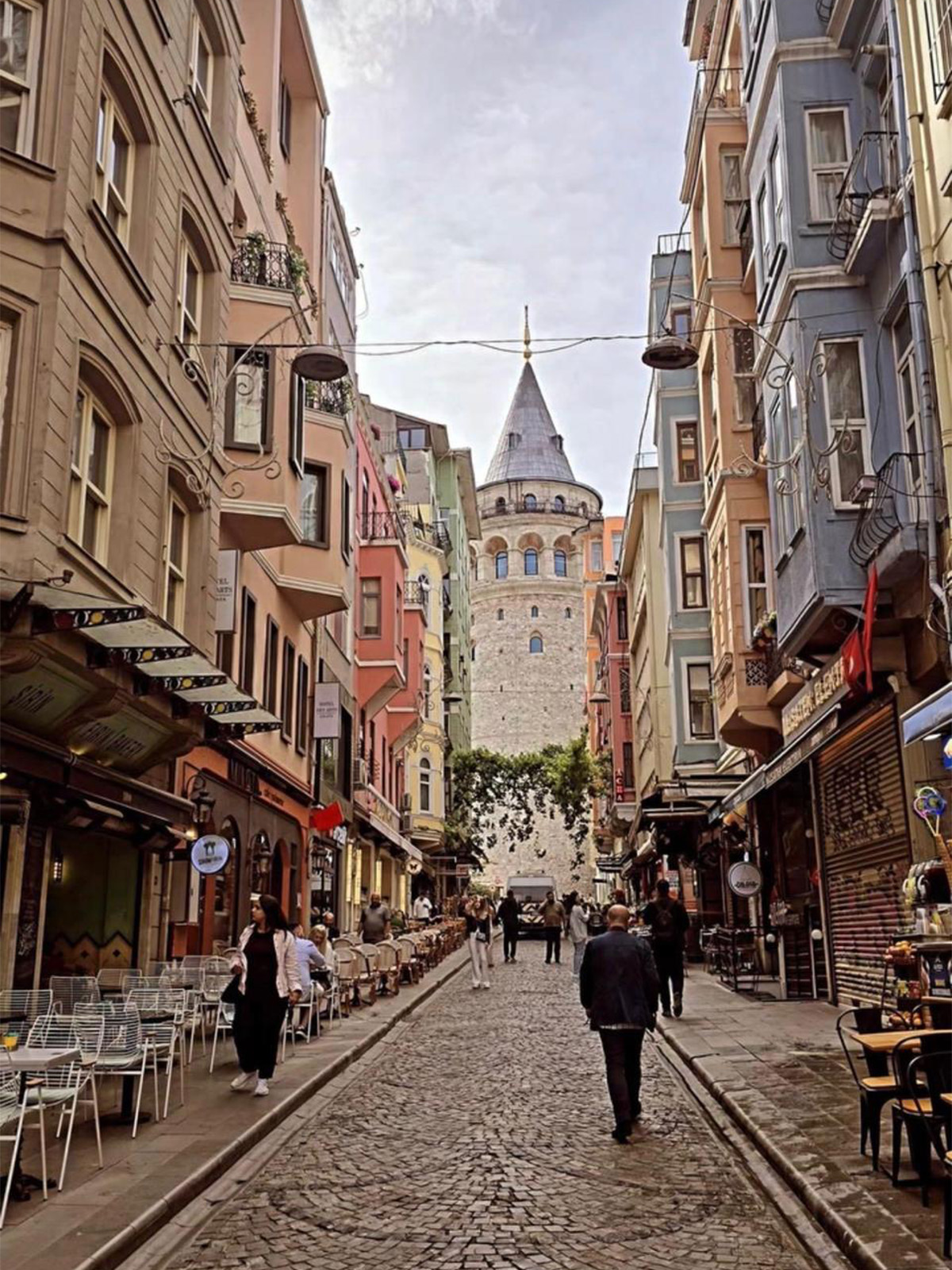
The road that continues downhill from the end of İstiklal Avenue leads to the Galata Tower, which offers panoramic views of the Bosphorus and the Golden Horn and is included on UNESCO’s World Heritage Tentative List.
Before the conquest of Istanbul, Beyoğlu was known as “Pera,” meaning “the other side,” and became a settlement where the Genoese colonies lived. In the area where today’s İstiklal Avenue is located, there were vineyards, hunting grounds, and cemeteries. Due to their disputes with VIII. Mikhail Palaiologos, the Genoese settled in Galata.
After the conquest of Istanbul, the English, French, and Dutch who wished to trade with the Ottoman Empire settled in Pera. As the French gained supremacy over the Genoese in Europe, this dominance was reflected in Pera as well, resulting in greater French influence over the district’s development.

Beyoğlu / Galata Tower
Many people are unaware that Galata Tower served for a long time as a fire watchtower and was known as the Galata Fire Tower. The tower provided this service for approximately 250 years. As you climb its stairs, you can almost imagine hearing the cries announcing a fire.
Originally built for defense and surveillance, the tower later functioned as a warehouse, a prison, an observatory, a fire watchtower, and eventually as a tourist restaurant. Today, it operates as a museum.
Although it no longer serves a military purpose, Galata Tower was carefully restored and preserved for centuries by the Turks. Its height made it ideal for fire surveillance, which helped save it—unlike some other historic structures—from neglect and ruin. The conical roof of the tower, covered in lead, burned down in a nearby fire on July 25, 1794, but it was later rebuilt even more beautifully than before. From the tower, the entire city of Istanbul and its surroundings can be seen, and for this reason, guards would watch the city from there at night to detect fires.
Spice Bazaar
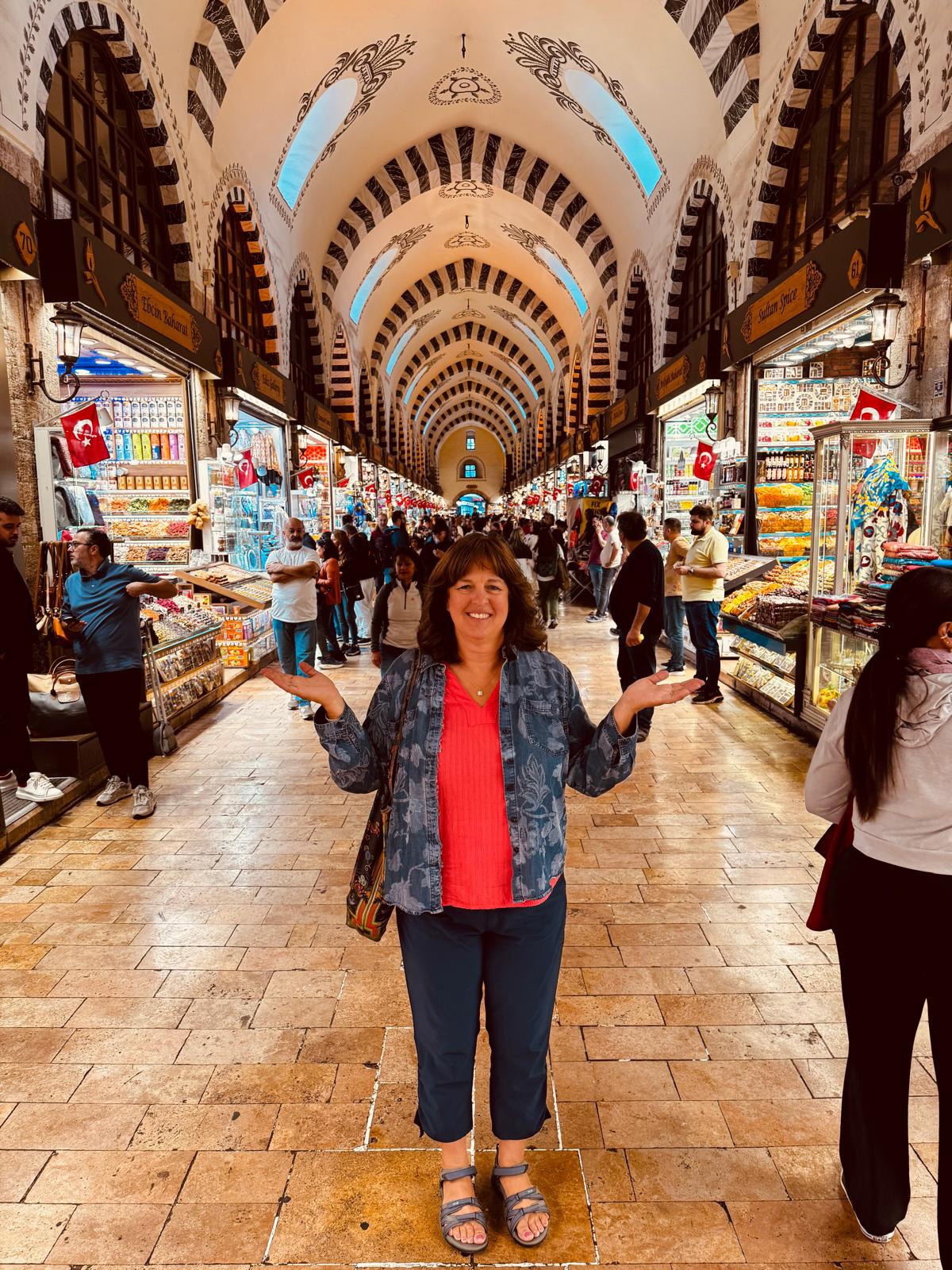
The Spice Bazaar (Mısır Çarşısı) is one of Istanbul’s most famous covered markets. It was built as part of the Valide Sultan Complex, whose construction was restarted by Hatice Turhan Sultan. The architect Mustafa Ağa, who completed the nearby Yeni Mosque, designed the bazaar in an L-shaped plan.The bazaar survived two major fires in 1691 and 1940, and after restoration by the Istanbul Metropolitan Municipality in 1940, it took its current form. It is called the “Spice Bazaar” because much of its initial capital came from taxes collected in Cairo. Historically, it was also known as the “Bazaar of the Spice Merchants” due to the wide variety of spices and medicinal herbs sold there. Today, it still offers an incredible selection of spices, herbs, sweets, and teas, making it a must-visit for visitors seeking both history and flavor. Its colorful stalls, historic architecture, and lively atmosphere make it the perfect spot to explore, shop, and take memorable photos. A visit here is a sensory experience you won’t want to miss on your Istanbul tour.
The Importance of the Spice Bazaar’s Location
The Spice Bazaar is located in Eminönü, which is considered the gateway to Istanbul’s Historic Peninsula. This location has been extremely important for trade throughout history. Thanks to its proximity to the Golden Horn harbor, goods arriving by ships during the Ottoman period could easily be transported to the market. Spices and exotic goods were brought here from Egypt and along the eastern trade routes. Today, ferries, trams, and pedestrian routes provide easy access to many of Istanbul’s major tourist attractions. For this reason, the Spice Bazaar is not only a marketplace but also an important historical trade center and cultural meeting point in Istanbul.

Get in touch now
Ready for an unforgettable tour?