
Classic Old City Tour (Walking Tour)
- Tour name : classic old city tour
- Operates : everyday ( all year round)
- Tour highlights: Blue Mosque ( Sultanahmet Mosque), hippodrome, Hagia Sophia, Topkapı palace, Grand Bazaar.
Blue Mosque (Sultan Ahmed Mosque)
Sources that describe the history of Istanbul often begin with a tale of prophecy. According to a prophecy learned by a commander named Byzas from the city of Megara at the Temple of Apollo in Delphi, the new city was to be founded opposite the land of the blind. In this story, the hero would only understand the intended message at the right place and time. When Byzas arrived in what is now the Sultanahmet district, he could not understand why such a strategic location with a natural harbor and fertile land had been left uninhabited while settlement had taken place on the opposite shore of the Bosphorus. He therefore considered that land to be the “land of the blind” and founded his city opposite Khalkedon (Kadıköy). Thus, this city, which began its life as a modest colony, would in time become the capital of the Roman, Byzantine, and Ottoman Empires and change world history.
The Sultanahmet Mosque was built in a location that has attracted attention in every period. During the Byzantine era, the Imperial Palace stood here, and magnificent mosaics from this palace are still exhibited today in the museum located to the south of the complex. In the Ottoman period, the area was used as a district of palaces belonging to state officials. Therefore, before the construction of the mosque began, the palaces of Semiz Ali Pasha, Sokullu, İsmihan Sultan, and Ayşe Sultan had to be expropriated.
This monument, the first major mosque built after Mimar Sinan’s Süleymaniye and Selimiye Mosques and the largest of the imperial (Selatin) mosques, was completed between 1609 and 1617. The Blue Mosque is the work of Sedefkâr Mehmet Ağa, a master who was trained during the era of a great master.
In accordance with Ottoman tradition, the mosque was built as a large and richly endowed complex (külliye). However, many of the surrounding structures have not survived to the present day. Among the sections of the complex that have been preserved are the imperial pavilion (hünkâr kasrı), madrasa, primary school (sıbyan mektebi), timekeeper’s room (muvakkithane), arasta (bazaar), bath, bakery, kitchen, soup kitchen (imaret), and the tomb of Sultan Ahmed. The mosque is surrounded on three sides by an outer courtyard.

Upon entering the interior, the first striking feature is the central dome with a diameter of 23.50 meters and a height of 43 meters, supported by four marble pillars with a diameter of five meters, known as “elephant feet.” The central dome is expanded on four sides by semi-domes and by two exedras on the mihrab side and three on the other sides. Carried on high pointed arches and pendentives, the dome appears spacious and bright. The large number of windows—260 in total—plays a significant role in giving the prayer hall this airy appearance. Among the interior decorations, the most striking elements are the tiles, most of which were produced in the İznik workshops. These tiles were largely produced as 25×25 cm panels using underglaze, colored glaze, and monochrome glaze with gilding techniques. Motifs such as tulips, roses, rosebuds, carnations, hyacinths, cypress trees, and spring trees are frequently used. Another decorative feature that stands out as much as the tiles is the painted ornamentation (kalem işi).
Another architectural feature that makes the mosque special is its six magnificent minarets. No mosque with six minarets had been built before in Ottoman history. These minarets, with two balconies on those in the front courtyard and three on the others, have been the subject of various urban legends from their construction to the present day. According to the story, religious authorities objected when they saw that the number of minarets equaled that of the Masjid al-Haram in Mecca, and the Sultan resolved the issue by ordering the construction of a seventh minaret in Mecca.
On the western side of the courtyard, you will notice a chain hanging above the gate opening toward the Hippodrome. It is said that sultans entering the courtyard bowed their heads to avoid hitting the chain. Thus, the chain symbolically reminded that God is greater than the sultan and emphasized that everyone entering the mosque is equal. After passing the chain, the inscription you will see above the main entrance was written by Derviş Mehmed, the father of the 17th-century Ottoman traveler Evliya Çelebi.Formun Üstü

Hippodrome
The term “Hippodrome”, derived from two Greek words meaning horse and course, continued to be used with a similar meaning after the city came under Turkish control, and during Ottoman rule the area was called “At Meydanı” (Horse Square). The construction of the first hippodrome is dated to the reign of the Roman Emperor Septimius Severus (193–211). During the struggle for the throne, the city of Byzantion supported Severus’s rival Pescennius Niger and was besieged for three years. After it was captured, the city was punished by being completely destroyed. However, shortly after eliminating his rivals and becoming sole emperor, Severus rebuilt the city, and it was later developed and expanded during the reign of Constantine I, the city’s acknowledged founder. The Hippodrome was constructed during this period.
Following the decision in 330 to move the imperial capital from Rome to Byzantion, the former capital seems to have been deliberately replicated in the new city. For instance, the seven hills of Rome were artificially recreated in the new capital, which is why Istanbul is still known today as the “city of seven hills.” A more explicit example is the selection of the name Nova Roma (New Rome) for the city. As part of this process of Romanization, a structure similar to Rome’s Circus Maximus was built in the new capital. Although the Hippodrome did not rival the Circus Maximus in grandeur, it was nevertheless one of the essential elements of Roman identity. Since very little remains of its former magnificence, it is difficult to imagine the Hippodrome’s appearance in antiquity. Originally measuring 480 meters in length and 117.5 meters in width, this monumental structure is estimated to have had a capacity of approximately 100,000 spectators.
At the center of the Hippodrome ran a longitudinal platform known as the spina, which was adorned with monumental works. Chariot races—considered the most attractive events of the Hippodrome—were held around the spina, with teams known as the Blues, Greens, Reds, and Whites completing seven laps. These races were watched by the emperor from a special imperial box (kathisma) connected to the palace, allowing the ruler to engage directly with the people and conduct imperial propaganda.
Although many monumental structures once stood on the spina, only three have survived to the present day. The oldest of these is the Egyptian Obelisk, originally erected around 1450 BC by Pharaoh Thutmose III at the Temple of Karnak in Luxor to commemorate his victory in a Mesopotamian campaign. Brought to Alexandria in 357 by Constantius II, the son of Constantine I, the monument was finally erected in the Hippodrome in 390 during the reign of Theodosius I. Also known as the Obelisk of Theodosius, it is believed to have originally stood about 30 meters high. However, due to the breaking of its lower section during transportation or erection, only 19.59 meters of the obelisk survive today. Including its base, the monument currently measures 25.6 meters in total height. Reliefs on two sides of the stylobate beneath the base depict the erection of the obelisk and scenes of chariot races, while Greek and Latin inscriptions on the other two sides describe the emperor raising the monument.
The Serpent Column is another monument that has survived. It was one of the valuable offerings dedicated to the Temple of Apollo at Delphi by the Greek city-states in gratitude for their victory over the Persians at the Battle of Plataea in 479 BC. The names of the participating city-states were engraved on the coils of the column. It is known that the original monument also supported a golden tripod held by three serpent heads. One fragment of a serpent head that has survived is currently exhibited in the Istanbul Archaeological Museums.
Another surviving monument is the Column of Constantine, also known as the Walled Obelisk. Constructed from carefully cut stones of varying sizes, the exact date of its original construction is unknown. An inscription on its base records that it was restored in the first half of the 10th century by Emperor Constantine VII Porphyrogenitus. Standing 32 meters high at the turning point of the chariot races, this monument was once covered with bronze plates, which were stripped and looted during the Fourth Crusade. During the Ottoman period, the monument acquired a new function and became a target for those who attempted to climb it to demonstrate their skills during public celebrations in the square.
Another notable historical feature of the area is the German Fountain, which was prepared in Germany and brought to At Meydanı in 1901. Gifted by German Emperor Wilhelm II, the fountain features a domed roof supported by eight columns, with the interior decorated with gold mosaics. Inside the dome are the tughra of Sultan Abdülhamid II and the monogram of Wilhelm II.

Hagia Sophia
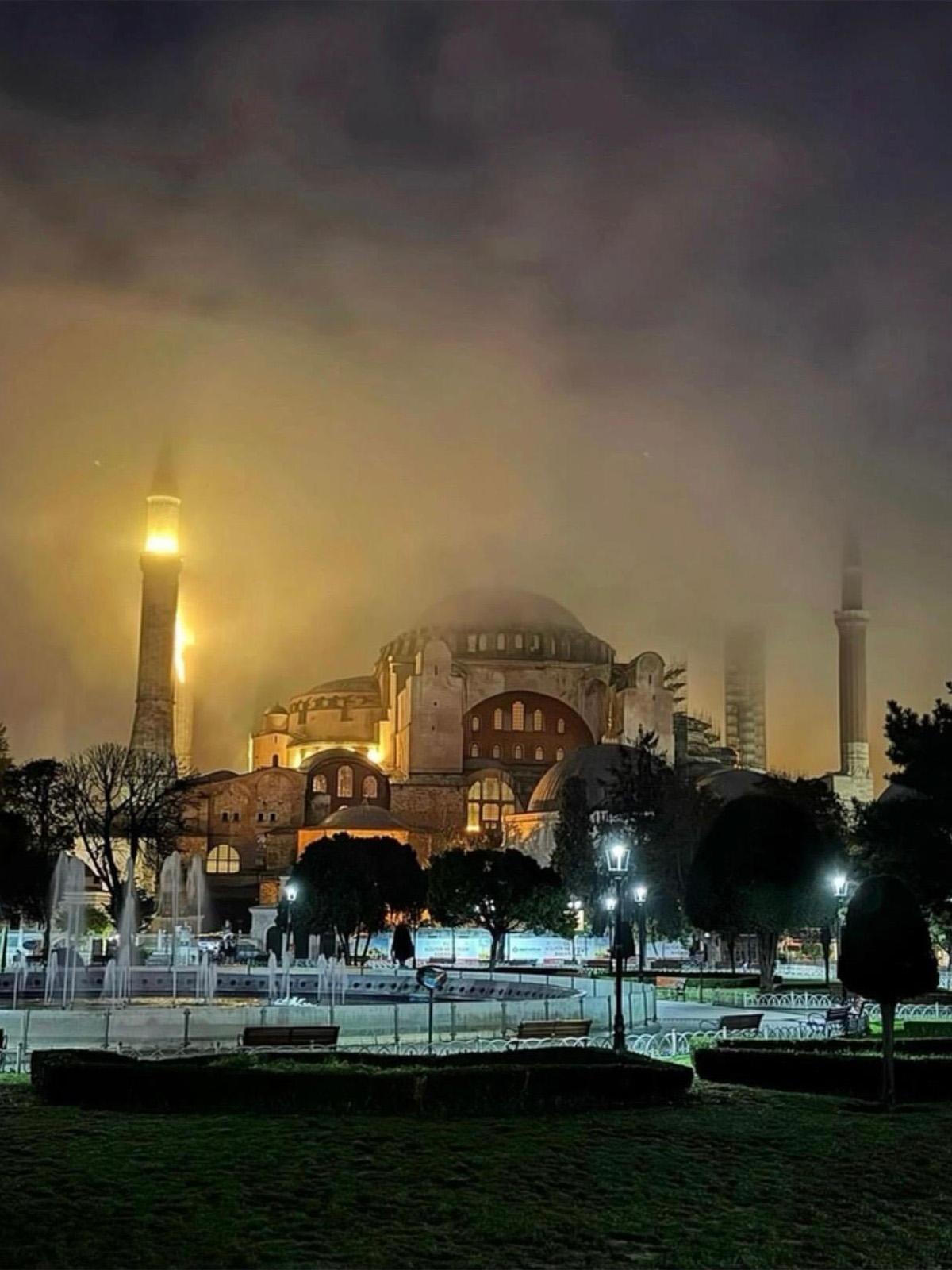
Hagia Sophia was referred to as the Great Church (Megali Ekklesia) because it was one of the largest buildings in the city at the time. Taking its name from two Greek words meaning “Holy Wisdom,” Hagia Sophia has rightfully stood in all its splendor for 1,500 years in the city’s most important square.
During the reign of Constantius II, son of Constantine the Great, a large church was built on this site; however, it was destroyed during a revolt in 404.
The second structure erected here was also ruined during the famous Nika riots (532). Thereupon, Justinian I ordered the construction of the magnificent monument we see today.
For this monumental project, two architects—actually one a mathematician and the other a physicist—were appointed: Anthemius of Tralles and Isidore of Miletus. A total of 10,000 workers, operating in two shifts, were placed under their command, and the building was completed in the remarkably short span of five years and ten months.
Its height from the ground is 55.60 meters, and its diameter is approximately 31–32 meters. The dome, set on a circular plan—similar to that of the Pantheon—was already known in Roman architecture even before Hagia Sophia.
Twenty-one years after its construction, an earthquake caused serious damage to Hagia Sophia, and its magnificent dome had to be rebuilt. Following this first major restoration, carried out by Isidore the Younger, the nephew of Isidore of Miletus, Hagia Sophia underwent numerous similar interventions and restorations throughout its history.
Having served as the patriarchal church for 916 years, Hagia Sophia was converted into a mosque after 1453.
Following its conversion, minarets were added to the structure—first during the reign of Mehmed II (Fatih), then during the reign of his son Bayezid II; the last two were built personally by Mimar Sinan.
The surviving figurative mosaics date from between the 9th and 12th centuries. Between 1847 and 1849, Hagia Sophia was restored by the Italian architect Gaspare Fossati and his brother Giuseppe Fossati, under the order of Abdulmejid I (1839–1861).
In addition, several changes were made: the mosaics and frescoes were appropriately covered, and essential elements required in a mosque—such as the mihrab and the minbar—were installed. Large circular plaques bearing the names “Allah,” “Muhammad,” “Abu Bakr,” “Umar,” “Uthman,” “Hasan,” and “Husayn” were also added to the interior.
After serving as one of the most prominent places of worship for Muslims for 477 years, the building began to be used as a museum in 1935.
Used as a museum for 86 years until 2020, Hagia Sophia became one of Turkey’s most visited tourist attractions during this period. As of 24 July 2020, it has once again been reopened for worship as a mosque.

Topkapı Palace
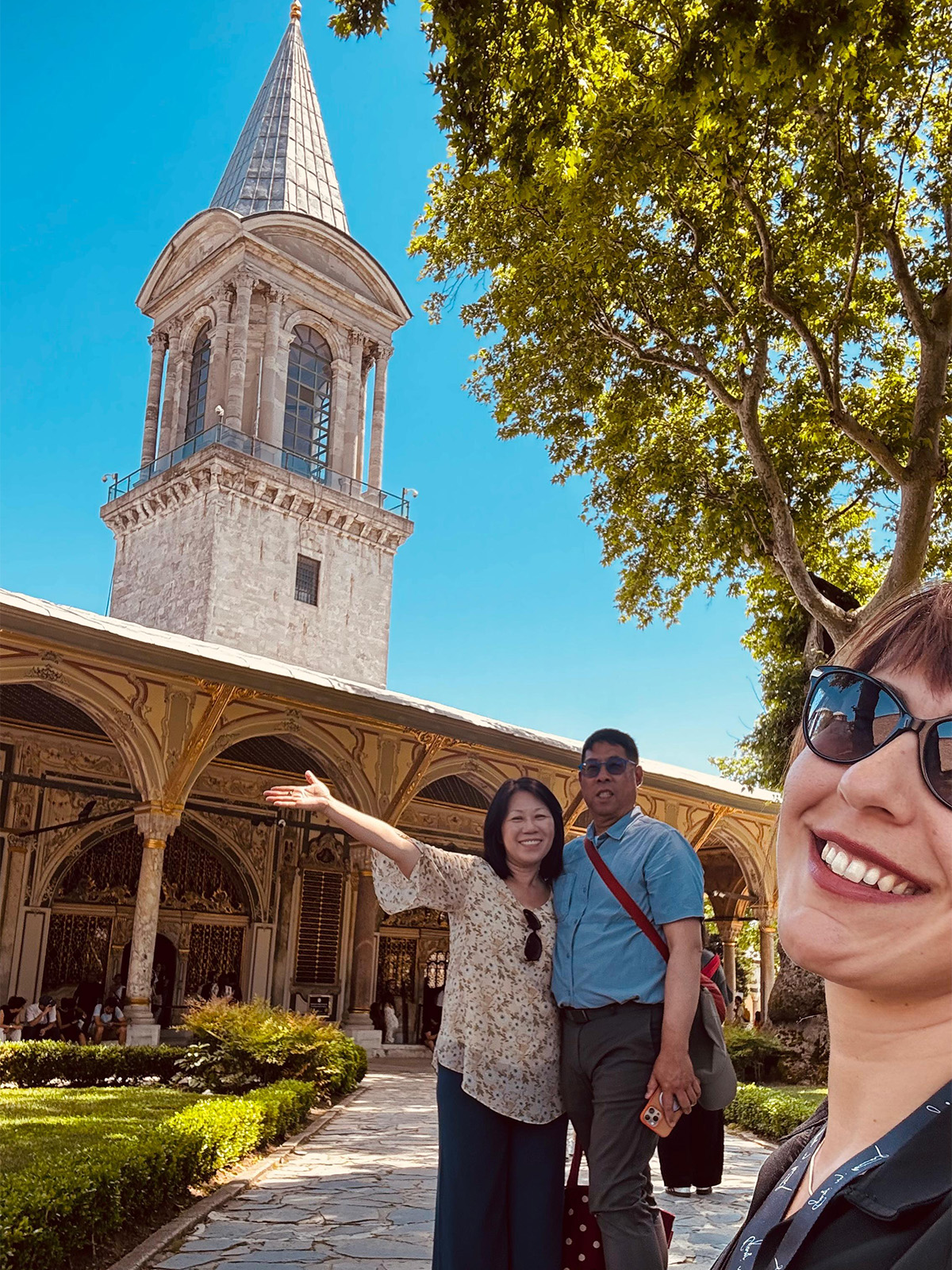
Topkapi Palace is located at Sarayburnu, a promontory overlooking the Golden Horn. It is believed that the acropolis of the ancient city of Byzantium once stood here.
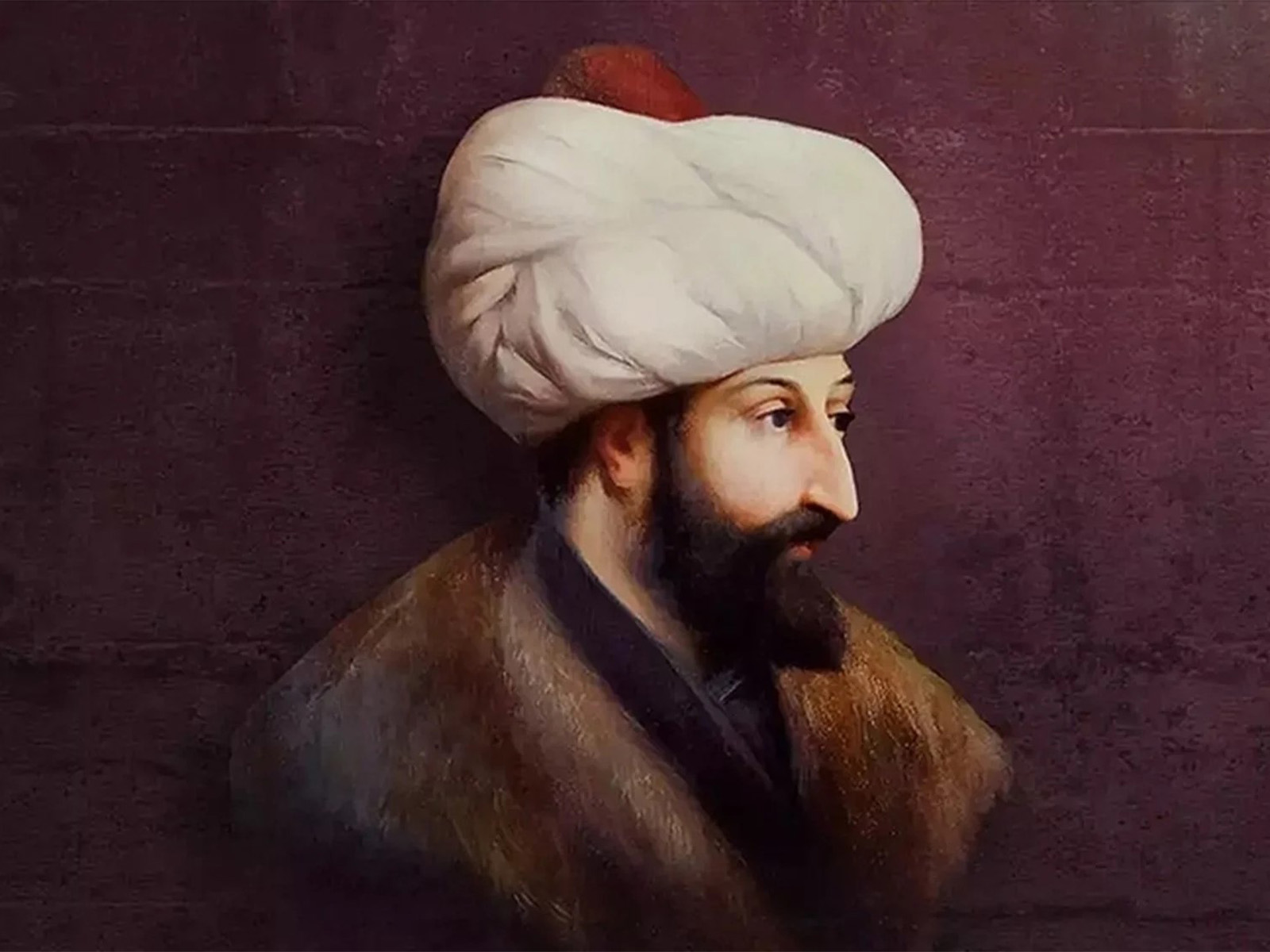
After completing his conquest, Mehmed II wished to build a palace befitting the city he had made his capital. As its location, he chose the site where Istanbul University stands today, in present-day Beyazıt. However, this first structure must have been considered insufficient, for shortly afterward the need was felt to construct a new palace. This second palace was called “Saray-ı Cedid,” meaning “New Palace,” in reference to the previous one.
The reason the complex came to be known as Topkapı Palace is connected to another structure built in the 18th century near the Byzantine walls, which was named “Topkapusu Sahil Sarayı” (the Shore Palace of the Cannon Gate) due to the ceremonial cannons placed in front of it.
Construction of Topkapi Palace began in 1460, and the palace was used for approximately 400 years. Over time, it developed and changed through additions made by different sultans.
Topkapı Palace is surrounded on the landward side by the Sur-ı Sultani (Imperial Walls) and on the seaward side by the Byzantine walls, covering an area of 700,000 square meters.
The palace’s main entrance gate is called the Bab-ı Hümayun (Imperial Gate). This was a ceremonial gate used primarily by the Sultan and high-ranking officials rather than by the general public. Built during the reign of Mehmed II, it is known that there was once a pavilion above this gate, although that structure has not survived to the present day.
Palace Kitchens:
Rebuilt by Mimar Sinan, the Palace Kitchens of Topkapi Palace were known to prepare meals for approximately 5,000 people daily, offering an average of 50–60 different dishes each day. The food prepared here was not served solely to members of the palace; it was also distributed to anyone who happened to come to the palace for various reasons, as well as to people living in its vicinity.
Third Courtyard:
Entrance to the Third Courtyard is through the Babü’s Saade, meaning the “Gate of Felicity.” Considered the beginning of the Sultan’s private residence, this gate was so exclusive that even grand viziers were not permitted to pass through it without authorization, except when proceeding to the Audience Chamber.
Within the Third Courtyard of Topkapi Palace, there are several sections, each worthy of being considered a museum in its own right. In addition to the Miniature and Portrait Collection, there is the Collection of the Sultans’ Costumes, where the kaftans and garments of the Ottoman rulers are displayed. The Imperial Treasury houses world-famous masterpieces such as the Topkapi Dagger and the Spoonmaker’s Diamond.
Also located here is the Chamber of Sacred Relics, which preserves hundreds of revered items, including the mantle (cloak), beard hairs, a tooth relic container, footprint, letters, bow, and sword attributed to the Prophet Muhammad; the pot of the Prophet Abraham; the staff of Moses; and the swords attributed to David, Ali, Abu Bakr, and Umar.
In the Fourth Courtyard, visitors pass among structures such as the Circumcision Room (Sünnet Odası), a small pavilion used during the circumcision ceremony of the princes of Ahmed III; the Revan and Baghdad Pavilions, built to commemorate the conquests of Revan and Baghdad by Murad IV; and the Tulip Garden. At the end, they are rewarded with a magnificent view of the Bosphorus.
Harem
Originally located in the Old Palace (Eski Saray) in Beyazıt, the Harem was moved to Topkapi Palace during the reign of Suleiman the Magnificent. The existing Harem complex largely dates from the period of Murad III (1574–1595).
Essentially, the Harem was the household of the Sultan, and its administration was largely under the authority of the Valide Sultan (Queen Mother).
The Harem was not merely an institution connected to the dynasty. Some of the girls educated and raised there were assigned to serve the Sultan, while others were married to aghas who had been trained in the Enderun (Palace School) and were later appointed as administrators in various parts of the empire.
Girls admitted to the Harem were first taught Turkish, followed by instruction in the Qur’an and literacy. In addition, they received training in music, dance, fine arts, and palace protocol. It was expected that those who completed this education and later married would be known as “palace ladies” in the regions where they settled and would set a good example in their communities.
In the 19th century, when it could no longer meet the needs of the age, Topkapi Palace was gradually replaced by palaces such as Dolmabahce Palace, Ciragan Palace, and Yildiz Palace.
Nevertheless, even after this transition, it continued to house the Sacred Relics, the Imperial Treasury, and the state archives. In 1924, by the order of Mustafa Kemal Ataturk, it was converted into a museum.

Grand Bazaar
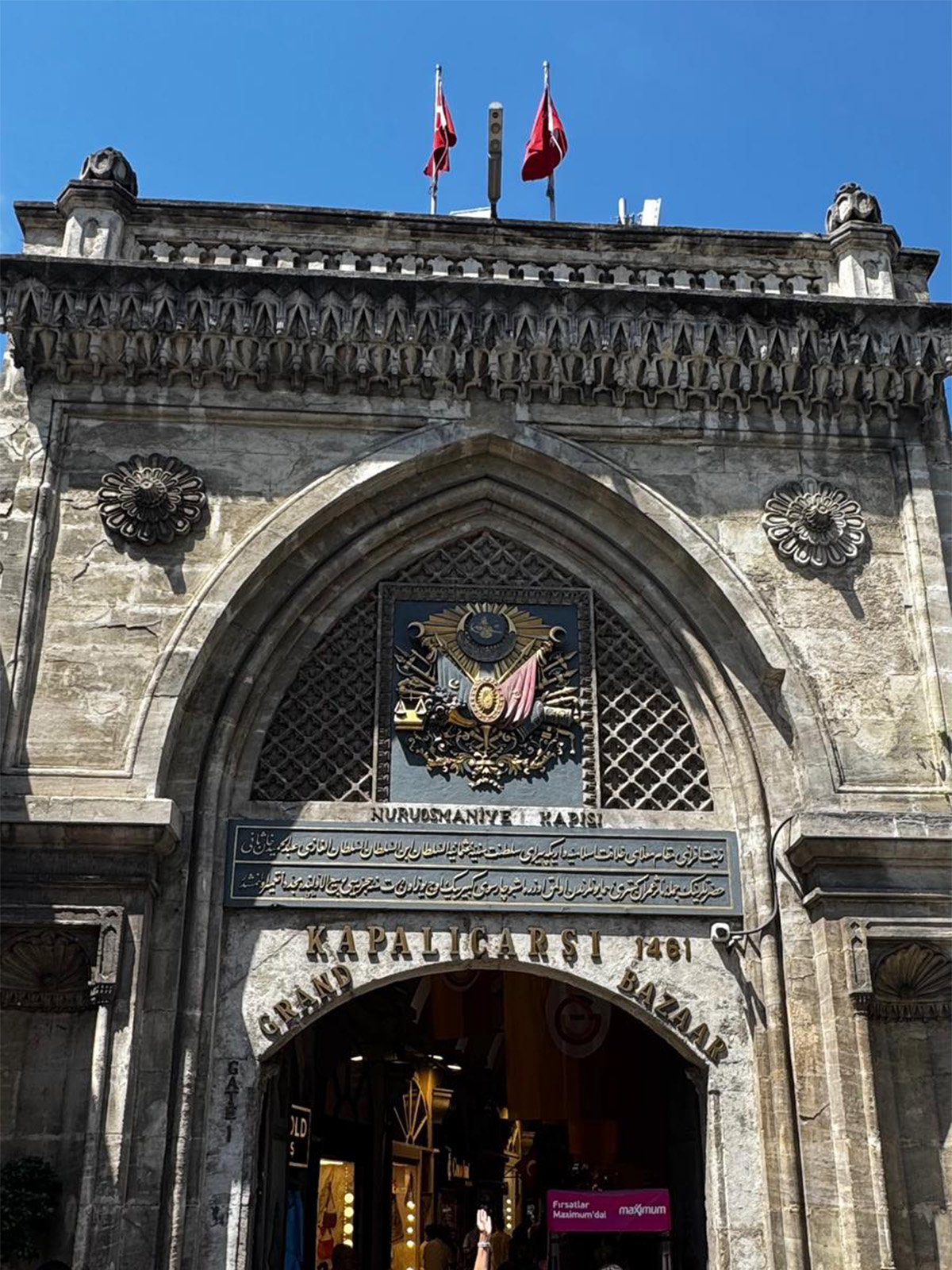
The fact that the ancient trade routes known as the Silk Road and the Spice Road passed through these lands led to the increase of inns, covered markets, and bazaars during the Ottoman period. The largest and most important of these bazaars is the Grand Bazaar. Also called the “Great Bazaar,” it is a historical document that bears the traces of both past and present consumption habits.
The main purpose of its foundation, after the conquest of Istanbul, was to strengthen the economy and to generate income for the maintenance and repair of Hagia Sophia. The first structure of the Grand Bazaar was commissioned in 1461 by decree of Mehmed II. Designed and built by Mimar Hayreddin, this vast market was constructed in the form of a large labyrinth.
Within the Grand Bazaar are three major bedestens (covered market halls), including Cevahir, Sandal, and Galata, which are among the earliest Ottoman bedestens. Throughout history, the bazaar suffered damage many times due to major earthquakes in Istanbul and numerous fires, and it was repeatedly restored and rebuilt in sections.
According to current data, the bazaar covers an area of approximately 30,700 square meters and contains around 66 streets and nearly 4,000 shops. It is a closed complex consisting of shops, bedestens, storage rooms, inns, and small mosques. With later additions, it includes 5 mosques, 1 school, 7 fountains, 10 wells, 1 sebil (public water dispenser), a fountain courtyard, 24 gates, and 17 inns.
At the core of the Grand Bazaar’s foundation lies the principle of being a “waqf-based commercial center.” For this reason, above the Beyazıt Gate of the bazaar hangs the inscription “Allah loves the one who trades,” placed beneath the tughra (imperial monogram) of Abdul Hamid II.
Today, the Grand Bazaar is a major attraction visited by tourists, where carpets, leather goods, textiles, jewelry, antiques, and ceramic products are sold.

Get in touch now
Ready for an unforgettable tour?